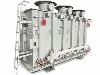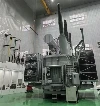
When specifying a power transformer, it is easy to spend all your engineering hours optimizing the core losses, winding materials, and insulation tap changers. But out in the field, all those high-value active components rely entirely on a single structural pressure vessel to survive: the transformer oil tank.
Whether you are building a compact distribution unit or a massive grid station, the oil tank transformer assembly is your first and last line of defense. It holds thousands of liters of dielectric fluid, manages intense thermal expansion, and protects the active heart of the system from extreme weather.
For years, procurement teams defaulted to rigid, overpriced catalogs from Tier 1 OEMs. But today, utility tenders demand agility, fast lead times, and rigorous custom engineering. If you want to stay competitive without sacrificing quality, you need a custom-fabricated transformer oil storage tank that delivers uncompromised high structural strength, hermetically sealed integrity, and a long service life.
As a specialized fabricator, we know that a high-performance transformer oil storage unit isn't just a welded box-it is a precision-engineered shield. Here is what it takes to build a tank that keeps your transformers bone-dry and operational for thirty years.
1. Eliminating the Pinhole Threat: Precision Manufacturing and Hermetically Sealed Design
Let's talk about the absolute nightmare of any transformer engineer: the slow, weeping oil leak. Because transformer oil tank assemblies are subjected to continuous thermal cycling-expanding and contracting every single day as power loads fluctuate-the welded seams endure relentless mechanical fatigue.
A single microscopic crack inside a weld seam is a ticking time bomb. This is why precision manufacturing and a true hermetically sealed design are non-negotiable.
To achieve guaranteed leak-proof performance, manual torch welding on main tank seams and corrugated wave-walls must be replaced by fully automated, robotic seam-welding systems. Automated welding maintains a perfectly uniform travel speed and heat input, achieving deep root penetration without burning through thin steel or introducing slag inclusions.
Furthermore, to catch the sub-millimeter micro-fissures that standard air-pressure tests miss, every tank should undergo ultraviolet fluorescent penetrant leak testing. If a hidden crack exists, the UV light reveals it instantly before the unit ever leaves the shop floor.

2. Engineering High Structural Strength for Severe Operational Stress
A transformer oil tank does not sit static; it "breathes." Under sudden overloads or pump surges, internal pressure spikes rapidly. During transport and crane hoisting on-site, unevenly distributed core weights put immense shear stress on the tank walls, base sills, and lifting lugs.
To guarantee high structural strength, every tank geometry must be backed by advanced stress modeling. From heavy-gauge base channels to CNC-formed reinforcement stiffeners, the structural frame must be calculated to prevent wall deflection. Whether your design requires flat plate tanks with external stiffeners or flexible corrugated walls, the steel must maintain structural integrity under both internal pressure spikes and severe seismic or wind loads.
3. Anti-Corrosion and Uniform Surface Quality for Harsh Climates
If a tank is deployed in a tropical rain forest, a high-salinity coastal grid, or a heavily polluted industrial corridor, ordinary industrial paint will fail within a few seasons. Once rust sets in on the tank exterior, the steel thins, leading to premature structural failure and oil weeping.
Achieving superior corrosion protection starts with a uniform surface preparation. The raw steel shell must undergo automated shot-blasting to an Sa 2.5 cleanliness rating to completely strip away mill scale and rust, creating an optimal surface profile for paint adhesion.
Following blast prep, automated flow-coating or electrostatic lines apply a multi-layer system-typically a high-solid zinc-rich primer, an epoxy intermediate coat, and a polyurethane topcoat. This ensures a thick, seamless barrier (C4 to C5-M compliant) that covers every corner, weld toe, and recessed edge, guaranteeing an extended, maintenance-free service life.

4. Custom Design: Moving Away from Rigid OEM Catalogs
No two grid projects are identical. Whether your client requires a unique footprint for a tight substation pad, non-standard bushing box orientations, or specific radiator header alignments, rigid catalog options simply won't cut it.
Partnering with a specialized fabricator gives you complete custom design flexibility. You can co-engineer the tank geometry directly from your CAD files (DWG, STEP, or PDF), tailoring wall thicknesses, internal oil flow channels, and mounting accessories to match your exact electrical core layout-without paying "big brand" markups or waiting six months for delivery.
Co-Engineer Your Next Transformer Tank with Us
Stop compromising your transformer designs with rigid, overpriced tanks. Your high-value electrical equipment deserves a custom shield engineered for absolute leak-proof reliability and structural strength.
Whether you are designing a new transformer oil storage tank, upgrading an existing oil tank transformer line, or sourcing custom corrugated tanks for an upcoming grid bid, let's look at the actual engineering drawings.
Upload your technical specifications, tank layouts, or general arrangement drawings (PDF, DWG, or STEP). Our structural engineering team will review your pressure requirements, stress loads, and tolerances, delivering a transparent, technically sound manufacturing proposal and quote within 48 hours.
[ Submit Your Oil Tank Drawings · Let's Review Your Specs within 48h ]
(We protect your engineering IP fiercely. All technical files and proprietary designs are handled under strict confidentiality, and we are happy to sign a mutual NDA before you upload your drawings.)