

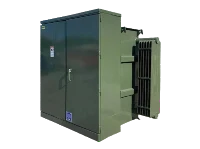
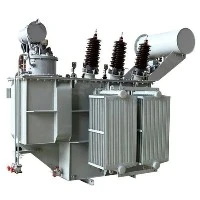
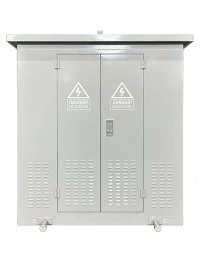
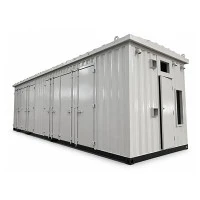


Three Phase Pad Mounted Transformer
Rated Capacity: 75–2,500 kVA to suit different load requirements.
Primary Voltage: Options include 4.16, 12.47, 13.8 and 34.5 kV.
Secondary Voltage: Configurations include 208Y/120 V, 480Y/277 V and 600Y/347 V.
Feed Configuration: Radial-feed or loop-feed arrangements for underground distribution networks.
Terminal Design: Dead-front or live-front construction to match utility specifications.
Natural Cooling: ONAN cooling uses natural oil circulation and air convection.
Outdoor Construction: A lockable cabinet encloses cable connections and helps restrict unauthorized access.
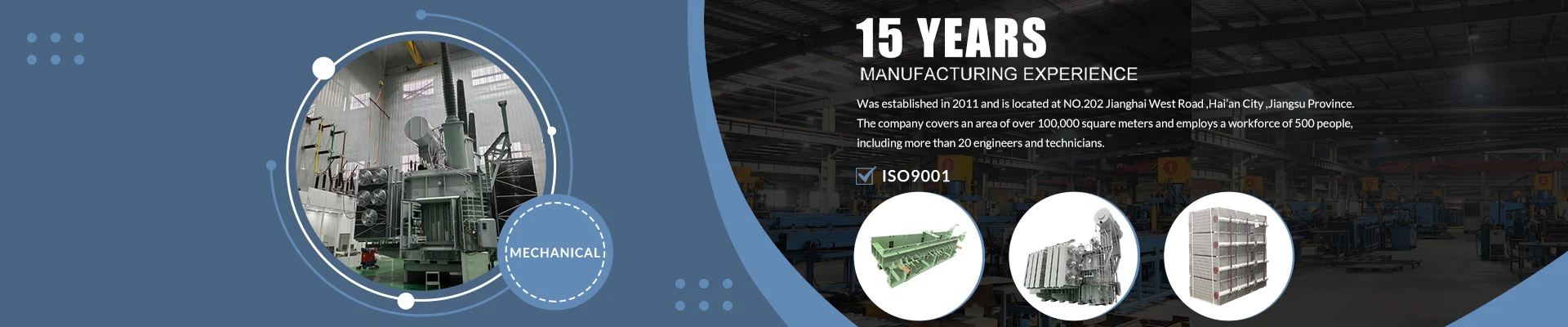
Nine-Axis Robotic Welding: Our transformer enclosures are welded using a nine-axis robotic welding workstation, helping achieve consistent weld quality and clean, uniform weld seams.
Send Your Specifications · Request a Quote
Three Phase Pad Mounted Transformer
Compact Outdoor Power Distribution for Commercial and Industrial Projects
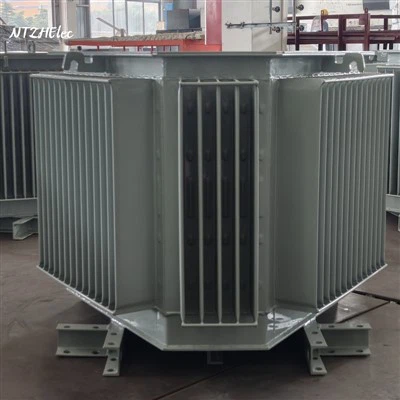
A three phase pad mounted transformer connects medium-voltage distribution networks to the low-voltage systems used in commercial buildings, industrial facilities and community infrastructure. Installed at ground level on a prepared foundation, it combines a liquid-filled transformer tank with enclosed cable termination compartments.
Its compact arrangement suits underground distribution systems where equipment footprint, controlled access and cable routing all matter. The transformer configuration is selected around the incoming supply, connected load and local utility requirements.
Ground-level installation: Suitable for outdoor distribution layouts with underground cable entry.
Enclosed connections: Lockable terminal compartments help restrict unauthorized access.
Project-specific ratings: Capacity, voltage ratio and winding connections matched to the electrical system.
Feed configurations: Radial-feed or loop-feed arrangements to suit the distribution network.
Terminal options: Dead-front or live-front construction according to the project specification.

Technical Specifications
The following values provide a reference for initial selection. Final ratings, dimensions and accessories should be confirmed in the approved technical proposal.
| Parameter | Reference Specifications |
|---|---|
| Product type | Three-phase, liquid-filled pad-mounted distribution transformer |
| Reference capacities | 75, 112.5, 150, 225, 300, 500, 750, 1,000, 1,500, 2,000 and 2,500 kVA |
| Primary voltage examples | 4.16, 12.47, 13.2, 13.8, 22.86, 24.94 and 34.5 kV |
| Secondary voltage examples | 208Y/120 V, 480Y/277 V and 600Y/347 V, subject to design confirmation |
| Cooling | ONAN for conventional mineral-oil designs |
| Distribution arrangement | Radial feed or loop feed |
| High-voltage termination | Dead front or live front |
| Winding connection | Delta or wye, with phase displacement specified |
| Insulating liquid | Mineral oil; ester-fluid designs subject to technical review |
| Impedance and taps | Defined by the system study and project specification |
| Installation | Prepared foundation with coordinated cable openings and service clearances |
Capacity and primary-voltage examples follow the reference product table; secondary-voltage notation and other configuration options are supported by established manufacturer documentation.
Quality standards of product

Construction Designed Around the Installation
The liquid-filled tank houses the core and windings, while the front compartments accommodate cable terminations and specified accessories. This arrangement brings the transformer and its connection points into one ground-level assembly.
A practical design also considers the work required after delivery. Door opening space, cable bending radius, terminal positions and access to operating handles should be checked against the site layout before the foundation is finalized.
For outdoor installations, enclosure material and corrosion protection deserve particular attention. Coated steel and stainless-steel constructions are established options in the market. The appropriate specification depends on environmental exposure, service expectations and the purchaser's requirements.
Nine-Axis Robotic Welding for Transformer Enclosures
The enclosure of our three phase pad mounted transformer is welded using a nine-axis robotic welding workstation. This process supports controlled, repeatable welding, helping maintain consistent weld quality and neat, uniform seams across production batches.
For projects involving multiple units, repeatable welding helps maintain consistent enclosure workmanship from one transformer to the next. Accurate component fit-up, weld inspection and surface preparation also contribute to the quality of the finished enclosure.
Alongside the welding process, the enclosure design considers practical installation and servicing needs, including door access, cable entry positions and space for cable termination.

Radial Feed, Loop Feed and Terminal Options
Radial-feed configuration
A radial-feed transformer connects to a single incoming feeder. A typical three-phase dead-front arrangement uses three high-voltage bushing positions, one per phase.
Loop-feed configuration
A loop-feed transformer typically provides six high-voltage bushing positions, allowing incoming and outgoing cable connections within a loop distribution arrangement. Network switching and protection must be coordinated with the utility's operating scheme; loop-feed construction alone does not provide automatic transfer or uninterrupted power.
Dead-front and live-front construction
A dead-front design uses screened, insulated high-voltage connector interfaces. A live-front design uses exposed high-voltage terminal connections within the locked compartment. The choice depends on the utility specification, cable accessories and operating practices. Both require access by qualified personnel.
Applications for Three-Phase Distribution
A three phase pad mounted distribution transformer is used wherever an underground supply must serve substantial three-phase loads.
| Application | Main Selection Considerations |
|---|---|
| Commercial buildings and shopping centers | Building demand, service voltage and available installation space |
| Manufacturing plants and warehouses | Process loads, motor starting and future expansion |
| Schools, hospitals and residential developments | Utility requirements, access control and maintenance arrangements |
| Data centers | Load characteristics, surge protection and coordination with the wider power system |
| Renewable energy installations | Purpose-designed step-up duty, inverter characteristics and grid requirements |
Commercial and industrial distribution are established applications. Data-center and renewable-energy projects can require additional design provisions beyond a conventional distribution specification.
Cooling, Losses and Operating Conditions
Transformer selection should consider how the equipment will operate throughout the year. Specify no-load losses, load losses and the expected loading profile so that quotations can be compared on a consistent basis.
Ambient temperature and altitude also affect thermal performance. A unit intended for a hot site or a high-altitude installation may need a revised design or loading assessment. These conditions should be stated during enquiry.
For liquid-filled designs, mineral oil and ester fluids offer different characteristics. Fluid selection must be coordinated with the transformer's thermal design, installation conditions and applicable project requirements.
Testing and Technical Documentation
The inspection and test plan should be agreed before production. Depending on the applicable standard and purchase specification, electrical verification can include:
Voltage ratio, polarity and phase-relation checks.
Winding resistance measurements.
No-load and load-loss measurements.
Impedance measurement.
Applied-voltage and induced-voltage dielectric tests.
Routine production tests and additional design or special tests should be identified separately in the order documentation.
For technical review, request a datasheet, general arrangement drawing, connection diagram, accessory schedule and the agreed test documentation. Specifying these deliverables early helps purchasers compare offers and coordinate installation.
Frequently Asked Questions
What does 480Y/277 V mean?
It identifies a wye-connected secondary with 480 V between phases and 277 V between a phase and neutral. Both values describe the same secondary system.
How do I choose the transformer capacity?
Start with the calculated maximum demand, then review motor starting, load characteristics, operating conditions and planned expansion. The selected kVA rating should follow the project load assessment.
Can a three phase pad mounted transformer be used for step-up duty?
Yes, purpose-designed pad-mounted transformers are used in renewable-energy step-up applications. Specify the intended power flow, voltage ratio and connected equipment during the design review.
What determines the three phase pad mounted transformer price?
Capacity and voltage ratings are starting points. Winding materials, guaranteed losses, insulation levels, terminal arrangements, protection accessories, enclosure construction and testing requirements also affect the quotation. A shared technical specification makes price comparisons more useful.
Request a Project-Specific Quotation
Discuss your three phase pad mounted transformer requirements with ZHIHE. To begin the technical review, please provide:
Rated capacity and quantity.
Primary and secondary voltages.
Frequency and winding connection.
Radial-feed or loop-feed requirement.
Dead-front or live-front requirement.
Installation country, ambient temperature and altitude.
Applicable standards, required approvals and delivery schedule.
Include a single-line diagram or utility specification where available. These documents help define the required configuration and prepare a quotation around your project.
Contact ZHIHE to discuss your transformer specification.
Hot Tags: three phase pad mounted transformer, China three phase pad mounted transformer manufacturers, suppliers, factory
Previous
No InformationNext
No InformationYou Might Also Like

Send Inquiry