



Oil Conservator In Transformer
Transformer Oil Conservator Tanks: Custom Fabrication to IEC & IEEE Standards
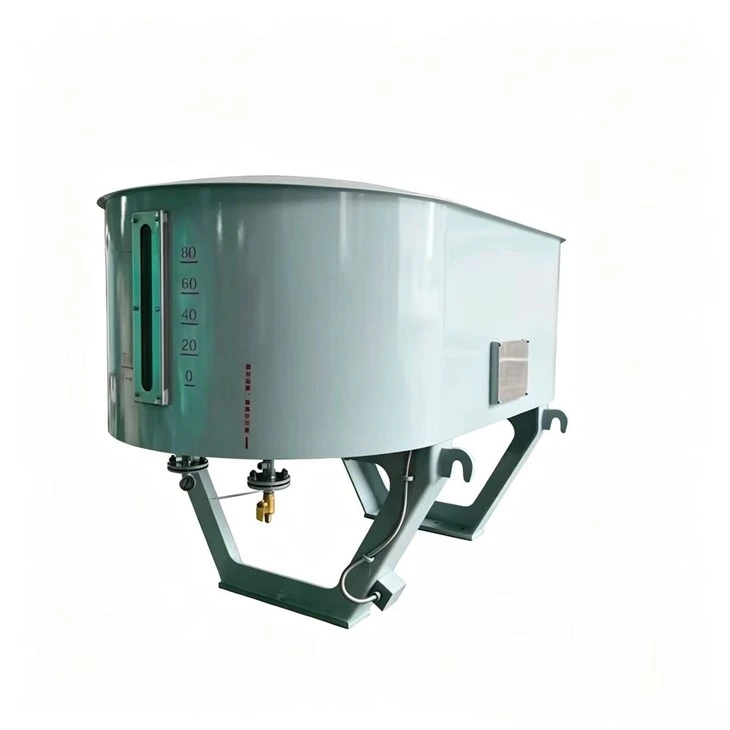
An oil conservator absorbs thermal expansion and contraction of insulating oil while preventing moisture and oxygen contamination in liquid-immersed transformers. We manufacture atmospheric, rubber diaphragm (air cell), and corrugated metal expansion conservator tanks according to customer drawings and international standards including IEC 60076 and IEEE C57.
Every unit is fabricated from certified carbon steel or stainless steel plates, welded by certified operators, and subjected to 100% leak testing before surface treatment.
Product Range
Corrugated Expansion Conservators: Uses metallic corrugated element flexure to absorb volume changes without internal rubber membranes. Maintenance-free design for hermetically sealed applications.
Custom Stainless Steel Conservators: Built using 304 or 316L stainless steel for coastal, offshore, or high-corrosion industrial environments.
Specifications
|
Parameter |
Standard Value / Option |
|
Material Grades |
Carbon Steel (Q235B, Q345B, S235JR, S355JR), Stainless Steel (304, 316L) |
|
Shell Thickness |
4.0 mm to 10.0 mm (based on pressure rating and tank diameter) |
|
Capacity Range |
100 Liters to 12,000 Liters |
|
Applicable Voltage Class |
11 kV to 500 kV Power and Distribution Transformers |
|
Internal Air Cell |
Nitrile (NBR) or Viton coated nylon fabric, aging resistant |
|
Welding Standards |
AWS D1.1, EN ISO 15614, ISO 3834 certified welding processes |
|
Leakage Testing |
Positive pressure air leak test (0.05 MPa), oil static head test, or vacuum test |
|
Surface Treatment |
Sa 2.5 sandblasting; Epoxy primer with Polyurethane topcoat (DFT 180 um to 300 um) or Hot-Dip Galvanizing |
|
Connection Flanges |
DIN, ANSI, PN10/PN16, or custom drawing specifications |
Custom Manufacturing to Drawings
We manufacture oil conservators directly from your engineering files (2D CAD / 3D Step or Iges models). Our production facility handles single-unit replacement prototypes and batch OEM manufacturing runs.
Engineering Verification
Internal review of plate tolerances, nozzle positions, lifting lug load ratings, and gauge clearance prior to cutting.
CNC Processing
Laser cutting and CNC plate bending ensure dimensional accuracy within +/- 1.0 mm tolerance across overall length and flange centerlines.
Custom Fittings
Integration of Buchholz relay connection pipes, oil drain valves, oil filling plugs, and explosion-proof vent interfaces as specified in your design.
Manufacturing & Quality Control
Our quality control process covers raw material arrival through final export packaging under ISO 9001 certified procedures:
Material Traceability
All steel plates and forged flanges come with EN 10204 3.1 material test certificates. Heat numbers are stamped on each cut component.
Welding Quality
Longitudinal and circumferential seams are produced using submerged arc welding (SAW) and gas metal arc welding (GMAW). NDT testing (Liquid Penetrant PT or Ultrasonic UT) is performed on critical load-bearing welds and seams per EN ISO 5817.
Pressure & Tightness Testing
Each completed conservator undergoes 100% leak inspection:
Air Pressure Test: Submersion or bubble leak check at 0.05 MPa for 30 minutes.
Transformer Oil Leakage Test: Filled with hot transformer oil under static head pressure for 24 hours to ensure zero micro-seepage.
Coating & Adhesion Inspection
Paint dry film thickness (DFT) is verified using digital magnetic gauges at multiple points. Cross-hatch adhesion testing is conducted according to ISO 2409 or ASTM D3359.
Applications

- Substation Power Transformers (33kV to 500kV)
- Industrial & Distribution Transformers
- Offshore Wind Substation & Marine Transformers
- Railway & Traction Substation Transformers
- Retrofit, Repair, and Replacement Projects for Aging Power Grids
- How to Select the Right Component
Transformer Oil Volume Calculation
Determine total expansion volume based on transformer oil mass, maximum ambient temperature variation, and top oil temperature rise limits (typically calculating for 8% to 10% oil volume variation).
Sealing System Requirements
- Select Air Cell Type where rigid oil oxidation prevention is required without direct air contact.
- Select Atmospheric Type for standard distribution units equipped with silica gel breathers.
- Select Corrugated / Sealed Type for maintenance-restricted sites.
Environmental Corrosion Category
Specify ISO 12944 classification (C3, C4, C5-I, C5-M) to define correct abrasive blast profiles and paint coating systems.
Instrumentation Interfaces
Confirm flange connection dimensions, magnetic oil gauge (MOG) mounting orientation, sampling valves, and Buchholz relay mounting positions.

Packaging & Delivery
Internal Protection
All internal surfaces clean, dry, and protected against humidity during transport. Flange faces sealed with heavy-duty blind gaskets and wooden or plastic covers.
External Protection
Rubber bladders secured internally; external fittings, oil level indicators, and breathers packed in individual reinforced wooden crates.
Container Transport
Tank body wrapped in vapor-corrosion inhibitor (VCI) film and strapped onto steel saddles or IPPC-certified ISPM-15 wooden skids for containerized ocean freight.
Honor Certificates


FAQ