If you are running a power transformer manufacturing plant in today's hyper-competitive market, winning a major utility tender comes down to a brutal balancing act. You need to hit ruthless efficiency targets, promise a twenty-year service life under punishing climate conditions, and somehow keep your margins intact against aggressive global competition.
And let's face it: one of the biggest logistical headaches in hitting those targets isn't the core steel or the copper windings-it's your radiator supply chain.
For years, procurement teams defaulted to sourcing radiator banks from legacy Western or Japanese OEMs, accepting the "big brand tax" as the price of security. But today, with unpredictable global freight costs, rigid lead times that disrupt your assembly schedules, and a total lack of flexibility for custom engineering, that old model is breaking.
This is exactly why the most agile transformer manufacturers worldwide are shifting their focus to specialized China radiator manufacturers. It isn't just about finding a cheaper component; it's about gaining a distinct engineering and lead-time advantage that directly wins bids.
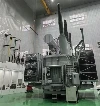
When you look closely at a radiator bank, it seems simple. But as an engineer, you know the truth: a transformer radiator is a high-stress pressure vessel masquerading as bent sheet metal. Every single day, it handles the thermal surges of hot oil expanding and contracting. In high-humidity tropical grids, freezing sub-zero environments, or high-salinity coastal installations, the 45mm gaps between the cooling elements become notorious moisture traps. If a radiator isn't built with absolute geometric precision, it becomes a major operational liability.
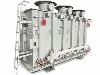
This is where the shift to a top-tier Chinese radiator specialist changes the game. By utilizing fully automated, high-speed roll-forming and robotic welding lines specifically designed for 520mm and 310mm radiator elements, these factories achieve a level of weld consistency that manual workshops simply cannot match. Automated seam-welding ensures 100% penetration along the element edges without introducing excessive heat, which warps the steel and creates the hidden micro-porosity that leads to delayed oil leaks.
Furthermore, because these manufacturers are deeply integrated into the world's most robust steel and chemical supply chains, their surface treatment capabilities are second to none. They don't just spray paint; they utilize automated flow-coating and electrostatic lines to push high-solid zinc primers and epoxy intermediate coats deep into the tightest fin recesses, easily hitting strict C4 to C5-M marine-grade anti-corrosion metrics. For the absolute harshest environments-like offshore wind platforms or desert solar fields-their access to large-scale, automated hot-dip galvanizing plants ensures an unbroken, protective zinc barrier per ISO 1461 that keeps your transformers rust-free for decades.
But the real breakthrough for international transformer builders is the agility. Working with a dedicated Chinese manufacturer means you aren't stuck picking from a rigid cookie-cutter catalog. Whether your client's footprint demands a non-standard center distance ranging from 500mm to 4000mm, a specific element pitch to optimize forced air cooling (ONAF/OFAF), or custom-engineered mounting flanges, you can co-engineer the solution directly with the factory floor.
At the end of the day, your transformers are judged by how cool they run and how dry they stay in the field, no matter where they are installed on the global grid. Sourcing your radiator banks from a high-precision Chinese partner gives you the exact blend of thermal efficiency, corrosion resistance, and supply chain speed you need to outmaneuver your competitors without sacrificing your quality metrics.ZHIHE ELECTRIC RADIATOR
Let's Look at the Data for Your Next Project
If you have a transformer project on your desk right now with tight cooling specs or challenging dimensional constraints, let's skip the generic sales brochures and look at the actual math.
Upload your specific radiator bank requirements or header flange drawings (PDF, DWG, or STEP). Our engineering team will calculate the heat dissipation profiles, verify the structural tolerances, and send you a transparent, technically sound manufacturing proposal within 48 hours.
[ Submit Your Radiator Drawings · Let's Review Your Specs within 48h ]
(We take intellectual property seriously. All technical data and proprietary designs are handled under strict confidentiality, and we are happy to sign a mutual NDA before you share your files.)