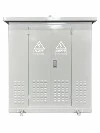
If you are manufacturing pad-mounted transformers for urban grids, commercial districts, or renewable energy sites across Asia, you know the stakes are entirely different from standard substation units. A pad-mounted transformer doesn't sit safely behind a high security fence. It sits on a concrete pad next to a sidewalk, in a shopping mall parking lot, or out in a humid tropical park where children play and pedestrians walk by every day.
Because it is entirely accessible to the public, your oil tank is no longer just a passive container for fluid and cores-it is a critical safety barrier and a massive liability if something goes wrong.
And let's be honest about the ultimate nightmare for any pad-mounted unit: a slow, weeping oil leak pooling on a public sidewalk, or a compromised tank wall bowing out under the brutal mid-day heat of an Asian summer.
When a pad-mounted unit fails in the field, it's rarely the electrical core that gives up first; it's almost always the mechanical integrity of the tank. Because these tanks house both the high/low voltage compartments and the oil-filled transformer in a compact, single-shield design, they are subjected to intense mechanical stress, constant tampering risks, and localized heat accumulation.
If you are sourcing custom pad-mounted tanks to bypass the rigid lead times and high markups of Tier 1 OEMs, you cannot treat the tank like a basic steel box. You have to audit how the fabricator handles the unique engineering pressures of a public, outdoor environment.
The first major point of failure is structural fatigue at the sill and compartment joints. Because pad-mounted tanks have integrated cabinet extensions to protect the bushings and cables, the weight distribution is uneven, and the doors are constantly yanked open during maintenance. If a fabricator uses cheap, manual welding on the overhanging compartments or doesn't reinforce the base sill, the structural seams will flex over time. Under the constant thermal expansion of the oil, that minor flexing turns into a microscopic tear right at the throat of the weld.
To prevent this, a premium pad-mounted tank requires automated robotic seam welding along the main tank-to-cabinet interface, combined with heavy-gauge, CNC-formed structural steel bases. It ensures the unit remains perfectly rigid, even if someone accidentally bumps into it with a vehicle or a lawnmower.
Furthermore, because these tanks sit directly on ground-level concrete pads, they are highly susceptible to moisture trapping at the bottom edge. In the tropical, high-humidity regions of Asia, condensation pools around the tank base, creating a breeding ground for rust. If your fabricator isn't performing a rigorous Sa 2.5 shot-blasting process to strip away mill scale before applying a high-thickness, multi-layer marine coating (especially on the bottom sill and inside the cable compartments), that tank will show signs of corrosion within two seasons.
Your reputation as a transformer manufacturer relies entirely on how well that public-facing tank holds its seal over a twenty-year lifespan.
If you are currently engineering a new pad-mounted transformer line for an upcoming utility bid or a renewable project, let's skip the generic sales talk and look at the actual geometry.
Upload your specific pad-mounted tank layouts or compartment drawings (PDF, DWG, or STEP). Our engineering team will review the structural load points, verify the pressure-relief clearances, and deliver a transparent, technically sound fabrication proposal and quote within 48 hours.
[ Submit Your Pad-Mounted Tank Drawings · Let's Review Your Specs within 48h ]
(We protect your engineering designs fiercely. All proprietary files are handled under strict confidentiality, and we are happy to sign a mutual NDA before you upload your technical data.)