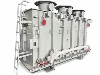
The primary function of a transformer heatsink is to effectively dissipate the heat generated during transformer operation, ensuring stable operation within a safe temperature range. Transformers generate a significant amount of heat during energy conversion; if this heat is not dissipated promptly, it can lead to aging of insulation materials, decreased efficiency, and even equipment damage. Heatsinks achieve efficient heat exchange by increasing the heat dissipation area, optimizing air convection, or using cooling media (such as oil or water).
From a technical perspective, heatsinks are typically made of aluminum alloy or copper, utilizing their high thermal conductivity to conduct heat from inside the transformer to the heat sink fins. The heat is then dissipated into the environment through natural convection or forced air cooling (such as by adding a fan). The design must consider parameters such as fin spacing, height, and substrate thickness to balance heat dissipation efficiency with space occupancy.
In terms of application scenarios, transformers of different power ratings require different specifications of radiators:
Small distribution transformers (<1000kVA) mostly use naturally cooled plate radiators; medium-sized industrial transformers (1000-5000kVA) often combine oil circulation with radiators; large power transformers (>5000kVA) require a composite cooling system with forced circulation via an oil pump.
Industry standards such as IEC 60076 have clear requirements for radiator performance, including temperature rise limits (oil-immersed ≤55K), heat dissipation power density (usually ≥50W/m²·K), etc. During installation, attention should be paid to the sealing of the radiator and transformer (to prevent oil leakage), cleanliness (to avoid dust clogging the radiators), and seismic design (to prevent mechanical stress cracking).
Maintenance points include regularly checking for radiator deformation, cleaning surface dust (it is recommended to blow with compressed air every 6 months), and monitoring oil level and cooling medium flow rate (the flow rate for oil-immersed transformers should be maintained at 0.1-0.3m/s). In high-temperature or high-altitude areas, additional heat dissipation area or forced air cooling solutions are required. We currently offer products with these features, providing multiple installation methods including screw-on and welding. Custom sizes are supported, and the surface is anodized for excellent heat dissipation. Contact us for the best solution.