How to Design Transformer Oil Tanks for Harsh Environments
Designing transformer oil tanks for harsh environments requires more than increasing paint or steel thickness. A transformer oil tank that performs well in a mild inland climate may not survive years of salt spray, desert dust, industrial chemicals or severe temperature cycling. Reliable performance comes from matching the material, structure, welding, sealing and coating system to the site.
The term transformer oil tank refers to the welded enclosure that contains the insulating liquid and supports the transformer's fittings. Search phrases such as oil tank transformer and oil tank in transformer usually refer to this same component, although transformer oil tank is the clearer technical term. It should not be confused with a separate transformer oil storage tank used for bulk oil handling.
1. Understanding Environmental Risks to Transformer Oil Tanks
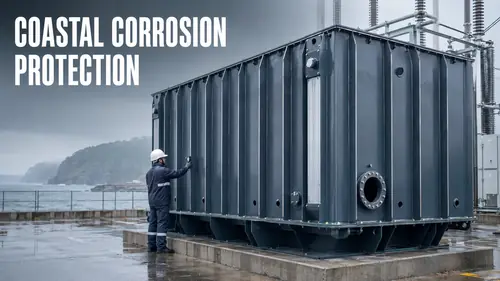
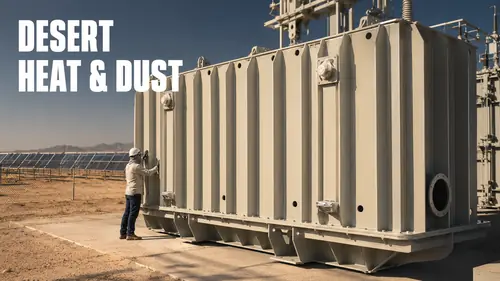
"Harsh environment" can mean very different things. A coastal transformer oil tank faces airborne chlorides and long periods of surface wetness. A desert transformer oil tank must handle solar radiation, dust and large day-to-night temperature changes. Chemical plants may expose the tank to aggressive vapours, while a high-altitude transformer tank faces stronger ultraviolet exposure and reduced air density.
The site assessment should record temperature, humidity, salinity, pollutants, altitude, wind, seismic requirements and flood level. A project specified from −40°C to +50°C covers a 90°C ambient range, affecting steel movement, gasket flexibility, coatings and connected pipework.

2. Selecting the Right Steel for Harsh Operating Conditions
Transformer tanks are commonly fabricated from weldable structural carbon steel, but the grade must suit the lowest design temperature, required strength and welding procedure. For a custom transformer oil tank, low-temperature impact toughness may be as important as room-temperature strength.
Steel certificates should confirm composition and mechanical properties. Plate thickness must be calculated from tank size, unsupported panel width, pressure, vacuum and transport loads-not copied from a smaller design. Adding corrosion allowance cannot replace an effective coating system because attack is rarely uniform.
3. Designing the Tank Structure for Pressure, Vacuum and Mechanical Loads
A reliable transformer oil tank design must withstand more than oil weight. A large power transformer oil tank may experience vacuum during oil filling, internal pressure during operation or testing, lifting forces, transport vibration, wind and seismic loads. Large flat plates are particularly sensitive to buckling under vacuum, so stiffener spacing and weld continuity matter as much as nominal plate thickness.
Finite element analysis can identify stress around lifting lugs, cover corners, valve openings and radiator flanges. At 40 m/s, basic dynamic wind pressure is approximately 1.0 kPa before shape, gust and safety factors. Attachments, conservator supports and pipework must be included in the load model.
4. Preventing Oil Leakage Through Reliable Welding and Sealing
In humid or corrosive environments, a small weld defect can quickly become a persistent oil leak. Water and contaminants collect around weld toes, brackets and overlapping plates, accelerating coating failure and local corrosion.
Reliable transformer tank welding begins with joint design that minimises inaccessible crevices and unnecessary intermittent welds. Welding parameters, consumables and sequence must match the steel. Thin panels need controlled heat input, while thick attachments require adequate penetration without abrupt stress transitions.
Flange flatness, gasket compression and pipe alignment are equally important. A sound weld cannot compensate for distortion or external pipe load. Critical seams require staged visual inspection and appropriate non-destructive testing.
5. Choosing the Right Anti-Corrosion Coating System
Coating selection for a corrosion-resistant transformer oil tank should be based on environmental corrosivity and required durability, not colour alone. ISO corrosion classifications such as C3, C4 and C5 provide a useful framework, while ISO 9223 considers temperature-humidity conditions, sulfur dioxide pollution and airborne salinity.
A C5 transformer tank coating may require abrasive blasting, a high-performance primer, barrier coat and UV-resistant topcoat. Agree the exact system and dry-film thickness with the coating supplier. Specifying "C5 paint" without preparation, edge treatment, recoat intervals and inspection criteria is incomplete.
Welds, sharp edges, bolt areas and narrow gaps deserve stripe coating before the full coat is applied.
6. Adapting Transformer Tank Design to Different Extreme Environments
Different environments require different engineering responses. A coastal transformer oil tank needs sealed crevices, careful drainage and strong chloride protection. A desert transformer oil tank benefits from a light-coloured UV-resistant topcoat, protected breathers and a layout that does not trap dust around cooling surfaces.
A cold-climate transformer oil tank requires suitable steel toughness, low-temperature gaskets and flexible pipe connections. A high-altitude transformer tank needs thermal and insulation coordination because reduced air density affects cooling and clearances. Flood-prone substations need raised fittings and anchoring against water forces.
There is no universal "harsh-environment tank." The design should respond to the dominant site risk without adding complexity that provides no practical benefit.
7. Pressure, Leak and Surface-Protection Testing Before Delivery
Testing must confirm both mechanical integrity and long-term surface protection. Dimensional checks should cover flange centres, cover flatness, mounting points and overall distortion before coating hides fabrication details.
Every completed tank should undergo controlled transformer tank leak testing based on its approved design. As one factory example, a suitably designed tank may be tested at 150 kPa for 20 minutes, followed by a second inspection. This is not a universal value; test pressure must follow the customer's specification and verified design limits.
Coating inspection should cover surface cleanliness, application conditions, dry-film thickness and damaged-edge repairs. Reports should remain traceable to the tank serial number.
8. Working with a Reliable Custom Transformer Oil Tank Manufacturer
A custom transformer oil tank manufacturer should do more than manufacture to a drawing. The engineering review should challenge unclear coating notes, unsupported attachments, difficult weld access and unrealistic test requirements before production begins.
Nantong Zhihe Electric supports drawing-based transformer oil tank manufacturing with controlled welding, dimensional inspection, 100% leak testing and project-specific C3–C5 anti-corrosion protection. Production records can be aligned with the project quality plan.
When comparing a transformer oil tank supplier, buyers should provide the tank drawing, transformer rating, pressure and vacuum requirements, temperature range, corrosion category, wind or seismic data and destination. Clear inputs reduce redesign, leakage risk and costly site repairs.
Frequently Asked Questions
What conditions are considered harsh for a transformer oil tank?
A harsh-environment transformer oil tank may face coastal salt spray, high humidity, desert heat and dust, low temperatures, ultraviolet exposure, industrial pollutants, high altitude, flooding, strong wind or seismic loads. The dominant risks should be identified before selecting the material, structure and coating system.
Which steel is suitable for transformer tanks in cold environments?
The steel grade should provide the required strength, weldability and impact toughness at the project's minimum design temperature. The correct grade cannot be selected from ambient temperature alone; plate thickness, joint design, welding procedure, mechanical loads and applicable project standards must also be reviewed.
How do vacuum and wind affect transformer oil tank design?
Vacuum can cause large flat plates to buckle, while wind loads act on the tank and external attachments such as conservator supports and pipework. Engineers should calculate plate thickness and stiffener spacing, then check critical areas such as lifting lugs, corners, flanges and openings.
How can oil leakage be prevented in corrosive environments?
Leak prevention begins with accessible joint design, qualified welding procedures, controlled heat input and staged inspection. Flange flatness, gasket compression and pipe alignment are also important. After fabrication, the completed tank should undergo a controlled leak test within its verified design limits.
What is the difference between C3, C4 and C5 corrosion protection?
C3, C4 and C5 describe increasing levels of atmospheric corrosivity. They help define the required surface preparation, primer, intermediate coat, topcoat and inspection plan. A coating specification should state the complete system and required dry-film thickness rather than simply requesting "C5 paint."
How does a coastal transformer tank differ from a desert tank?
A coastal tank needs strong chloride protection, sealed crevices and drainage details that prevent standing water. A desert tank requires UV-resistant coatings, protected breathers and layouts that reduce dust accumulation. Both may use similar steel structures, but their surface-protection and maintenance priorities differ.
What tests should be completed before a harsh-environment tank is delivered?
Testing should include dimensional inspection, weld examination, controlled leak testing and coating inspection. Surface cleanliness, application conditions, dry-film thickness and damaged-edge repairs should be documented. Test pressure and holding time must follow the approved design and customer specification.
What information is needed to quote a custom transformer oil tank?
Provide the tank drawing, transformer rating, material requirements, operating pressure and vacuum, temperature range, corrosion category, wind and seismic data, coating specification, required quantity and destination. Clear project inputs allow the manufacturer to identify technical risks before production.
Planning a Custom Transformer Oil Tank for a Harsh Environment?
A standard specification may leave important environmental risks unresolved. Send us your custom transformer oil tank drawing, site conditions, pressure and vacuum requirements, and coating specification. The engineering team at Nantong Zhihe Electric can identify potential issues in structure, welding, sealing and corrosion protection before production.
We support custom transformer oil tank manufacturing, controlled welding, dimensional inspection, 100% leak testing and project-specific C3–C5 anti-corrosion protection.