A new transformer oil tank should match the existing foundation and the requirements of the grid upgrade.
If connections do not match, cooling is inadequate, or lifting points are unsuitable, unexpected rework can extend the outage period.
Consider the transformer's condition, operating requirements, and confirmed drawings when comparing quotations.
Assess the Transformer and Define Requirements
First, decide whether you are replacing a faulty tank, refurbishing an existing transformer, or installing a larger unit.
The utility or repair company should assess the windings, insulation, bushings, and insulating fluid before deciding whether the core-and-coil assembly can be reused.
Replacing the transformer tank alone does not increase its electrical rating.
Record the cause of the original tank damage. Corrosion, gasket deterioration, vibration, and abnormal pressure require different corrective actions. Reproducing the old design without investigating the failure may lead to the same problem.
Include the expected load profile, ambient temperature, altitude, and available outage period in the purchasing specification.
Tank Size Matching
Always confirm the dimensions of the existing equipment. Previous repairs may have altered connections, brackets, or accessories.
Check that the internal space accommodates the core-and-coil assembly, lead routing, oil circulation, and mounting supports.
Externally, confirm that the tank footprint matches the foundation. Check wheel spacing, bushing positions, cable connections, drain valve access, and overall height.
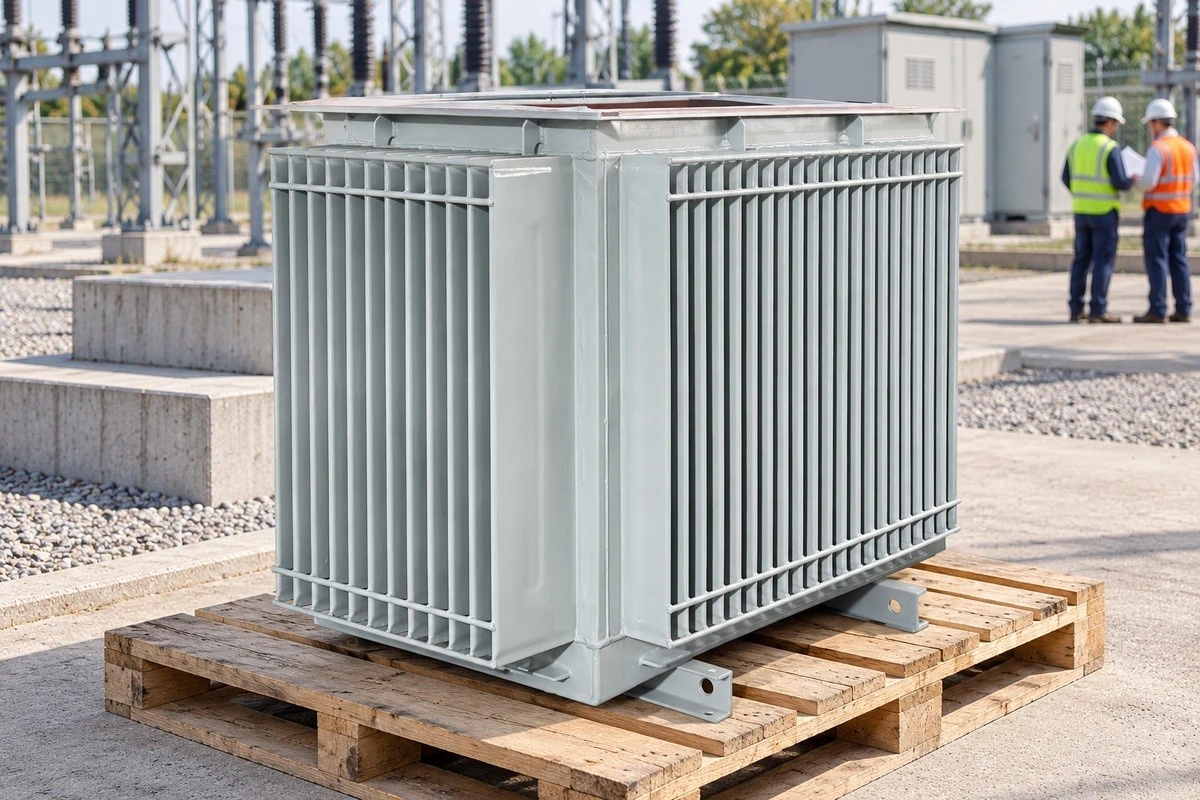
Allow clearance for both the projection and expected movement of the corrugated walls. Even if the tank fits the foundation, it may leave insufficient space inside an existing compact substation.
Measure dimensions from agreed reference points and approve the interface drawing before fabrication.
Cooling and Expansion
The heat to be dissipated depends on transformer losses. The nameplate rating alone does not establish the cooling requirement.
For illustration, assume 1.0 kW of no-load losses and 8.0 kW of rated load losses. Using a simplified current-squared relationship:
Estimated total losses = No-load losses + (Current ratio² × Rated load losses)
| Operating current | Calculation | Estimated total losses |
|---|---|---|
| 75% of rated current | 1.0 + (0.75² × 8.0) | 5.5 kW |
| 100% of rated current | 1.0 + (1.00² × 8.0) | 9.0 kW |
This example assumes constant voltage and loss reference temperature. Harmonic and temperature effects require separate assessment. www.rd.usda.gov
For a corrugated transformer tank, oil expansion also needs consideration. In hermetically sealed designs with flexible walls, the corrugations accommodate changes in oil volume as temperature varies. www.hitachienergy.com
Ask the transformer designer to confirm both cooling performance and expansion capacity. Greater surface area does not automatically provide sufficient wall flexibility.
Material Grades and Thickness
Confirm the material grades and thicknesses specified for the corrugated sheets, bottom plate, cover, flange, and supporting frame.
Each component serves a different purpose. Flexible walls accommodate movement, while the base and lifting attachments carry defined mechanical loads.
Thicker corrugated sheets increase stiffness and may reduce the movement available for oil expansion. Any thickness change should receive design approval.
Ask corrugated transformer tank manufacturers whether the lifting points are rated for the empty tank or the completed transformer.
Confirm the transport restraint arrangement. Handling and restraint forces should pass through approved structural points without damaging the corrugations.
Weld Quality, Sealing and Internal Cleanliness
Review how the manufacturer controls joint preparation, weld continuity, distortion, repairs, and traceability.
Pay particular attention to welds on corrugated sheets, corners, and transitions between thin sheets and thicker plates.
For bolted covers, confirm flange flatness, gasket compatibility, bolt spacing, and the tightening procedure. A coating cannot correct a defective sealing surface.
Require the removal of welding debris and process residues. Protect openings after cleaning to prevent contamination during storage and transport.
Plan how the oil will be handled during refurbishment. Drained oil may be held temporarily in a separate transformer oil storage tank.
Specify clean, compatible handling equipment and contamination controls. Testing should determine whether the drained oil is suitable for reuse.
Corrosion Protection
Examine the condition of the existing tank. Rust beneath the base, around welds, and inside narrow recesses can identify areas requiring better preparation and protection.
Confirm the surface preparation, coating products, dry film thickness, curing conditions, and repair procedures.
Dry film thickness means the thickness of the coating after drying.
ISO 12944 distinguishes environmental corrosivity from coating durability. Its high durability category, H, covers 15–25 years to first major maintenance. This is a maintenance planning range, not a product warranty. www.hempel.com
Provide access to inspect corrugation recesses and the underside of the base. Confirm that any internal coating is compatible with the selected insulating fluid.
Leak Testing, Inspection and Acceptance
IEC 60076-1 includes requirements concerning vacuum, pressure, and leak testing of transformer tanks. Confirm which requirements apply to the contract and identify the approved procedures before production. webstore.iec.ch
For immersion testing in a leak-test pool, agree on the following details:
| Test or inspection item | Details to confirm |
|---|---|
| Test method | Immersion arrangement and method of detecting leakage |
| Test pressure | Specified pressure and pressure basis |
| Test medium | Medium used to pressurize the tank and immersion liquid |
| Holding time | Required duration at the specified pressure |
| Observation | Areas inspected and method of recording results |
| Acceptance criteria | Conditions for acceptance or rejection |
| Repair procedure | Approved repairs, inspection, and retesting |
| Post-test condition | Drying, internal cleanliness, and protection of openings |
Corrugated tanks need pressure and deformation limits appropriate to their design. Confirm vacuum capability before specifying vacuum filling or processing.
The inspection package should include dimensional results, material identification, coating records, and individual leak-test results.
Agree separately on the electrical and thermal checks required for the refurbished transformer. A leak-tight tank does not establish electrical or cooling performance.
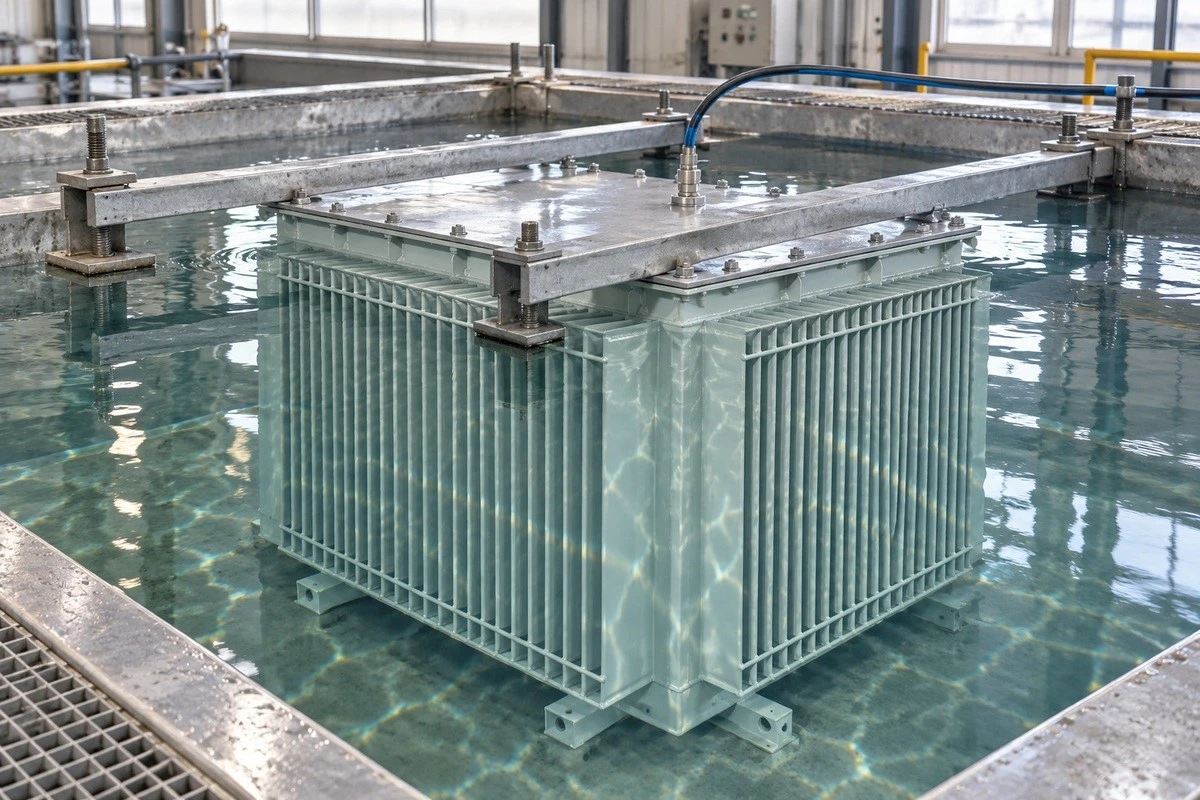
Cost per Kilogram, Scope of Supply and Production Time
Compare quotations using one approved drawing revision and an agreed billable weight.
Confirm whether pricing is based on theoretical steel weight or actual finished weight. Also establish which accessories, coatings, tests, and packing materials are included.
The following example compares two offers for the same design. These are illustrative figures, not market quotations.
| Cost item | Supplier A | Supplier B |
|---|---|---|
| Agreed billable weight | 400 kg | 400 kg |
| Unit price | USD 3.00/kg | USD 3.25/kg |
| Base amount | USD 1,200 | USD 1,300 |
| Required coating upgrade | USD 150 | Included |
| Comparable subtotal | USD 1,350 | USD 1,300 |
Freight and taxes are excluded.
Supplier B has a higher unit price but a USD 50 lower comparable subtotal because the required coating is already included.
Confirm production time from the agreed starting milestone. Allow for inspection, coating cure, packing, and transport before the planned outage.
Provide shortlisted suppliers with the same drawings and request a priced deviation list. Attach the agreed scope of supply, inspection plan, weight basis, and delivery schedule to the purchase order.