

Data centers depend on continuous electrical systems. Transformers feeding utility incomers, UPS systems and cooling equipment must remain available through changing loads. The transformer oil tank contains insulating oil, supports the active part and connects the cooling circuit.
For developers sourcing a China transformer oil tank, the first question is whether it can meet the project's thermal, mechanical, leakage and fire-safety requirements.
1. Why Transformer Oil Tank Reliability Matters in Data Centers
Many mission-critical facilities use N+1 or 2N architectures. A leaking tank can still remove an entire power path and consume the redundancy intended for another failure.
At an assumed drop volume of 0.05 mL, one drop per minute represents about 26 litres per year. Moisture entry, contaminated surfaces and unplanned isolation are more serious than the oil quantity alone.
A data center transformer oil tank needs welds, gasket interfaces, pressure relief, lifting points, radiator connections and coating protection to work as one system. These details determine whether it becomes a genuinely high-reliability transformer tank.
The same principle applies to hospitals, office campuses and other commercial facilities: redundancy is useful only when each installed transformer remains mechanically dependable and maintainable.

2. Key Design Requirements for Data Center Transformer Oil Tanks
Develop the tank drawing around actual interfaces and operating duties: active-part dimensions, oil mass, pressure and vacuum, cover arrangement, cable boxes, conservator piping, valves, radiators, foundations and transport limits.
Structural calculations should cover hydrostatic pressure, lifting, vacuum filling, internal pressure, applicable seismic duty and transport acceleration. Long panels may deflect even at acceptable average stress, so stiffener spacing matters.
A custom transformer oil tank suits restricted plant rooms, phased construction and prefabricated power modules. For a transformer tank for mission-critical data centers, review connection orientation and maintenance clearance before steel is cut.
3. Cooling Performance Under Continuous High Electrical Loads
Data center loads remain high for long periods. The power transformer oil tank and radiator bank must be treated as one thermal circuit.
For illustration, delivering 10 MW at 99.5% efficiency produces roughly 50 kW of losses. The actual split varies, but this heat must leave through the tank and cooling system.
Provide the load profile, guaranteed losses, ambient range, altitude and ONAN or ONAF stages. Include meaningful harmonic loading where applicable. A data center power transformer tank should not be selected from MVA rating alone.
4. Preventing Oil Leakage Through Welding and Structural Control
Leak prevention begins with fit-up. Poor joint gaps, misaligned stiffeners and distorted flanges encourage excessive welding heat, residual stress and deformation. Controlled sequences and qualified procedures produce a more stable shell.
Automated welding improves repeatability on long seams, while qualified manual welding remains necessary around flanges and complex intersections. Critical locations include stiffener ends, valve pads, radiator connections and the tank bottom.
Every OEM transformer oil tank needs testing before coating. For large main tanks, a soap-water leak test for a transformer oil tank uses controlled air pressure to reveal bubbles at leaking welds. One Nantong Zhihe Electric project uses 150 kPa for 20 minutes with 100% inspection. The approved drawing defines the actual test; 150 kPa is not universal.

5. Fire Safety, Oil Containment and Environmental Protection
Mineral oil provides insulation and cooling but adds combustible liquid to the electrical plant. Coordinate tank design with pressure relief, fire detection, drainage and secondary containment.
Containment must follow local rules and account for the credible oil release plus rainwater or firefighting water where applicable.
For natural or synthetic ester fluids, confirm gaskets, coatings, viscosity and cooling assumptions. Changing fluid without reviewing the data center power transformer tank can affect sealing and heat transfer.
6. Corrosion Protection for Indoor and Outdoor Installations
Indoor rooms may experience condensation or chemical exposure. Outdoor tanks face rain, ultraviolet radiation, pollution or coastal salt. Select coatings for the real environment, not simply indoor or outdoor classification.
A corrosion-resistant transformer oil tank specification should define preparation, coating layers, colour, dry-film thickness and repair procedures. C3, C4 and C5 systems cover increasingly aggressive environments, but application quality and edge coverage remain critical.
For a transformer oil tank for commercial facilities or a coastal data center, the China transformer tank supplier should protect flange faces and openings during transport and storage.
7. Leak Testing and Quality Inspection Before Delivery
Final inspection goes beyond weld appearance. A reliable transformer oil tank manufacturer checks materials, dimensions, flange locations, lifting points, leakage, surface preparation and coating thickness.
During transformer oil tank leak testing, main tanks can be pressurized and checked with soap water along specified welds. Suspect areas require inspection, repair and complete retesting, with each point recorded.
Before shipment, verify covers, internal cleanliness, bracing and packaging. Poor lifting or transport supports can distort a tank that passed factory testing.
The quality dossier should include approved drawings, material records, dimensional reports, leak-test results and coating measurements for factory acceptance and future maintenance.
8. Choosing a Reliable China Transformer Oil Tank Manufacturer
A capable China transformer oil tank manufacturer treats drawings as engineering documents. When auditing a custom transformer oil tank manufacturer in China, review its controls for revisions, weld qualifications, tolerances, soap-water testing, coatings and nonconformances.
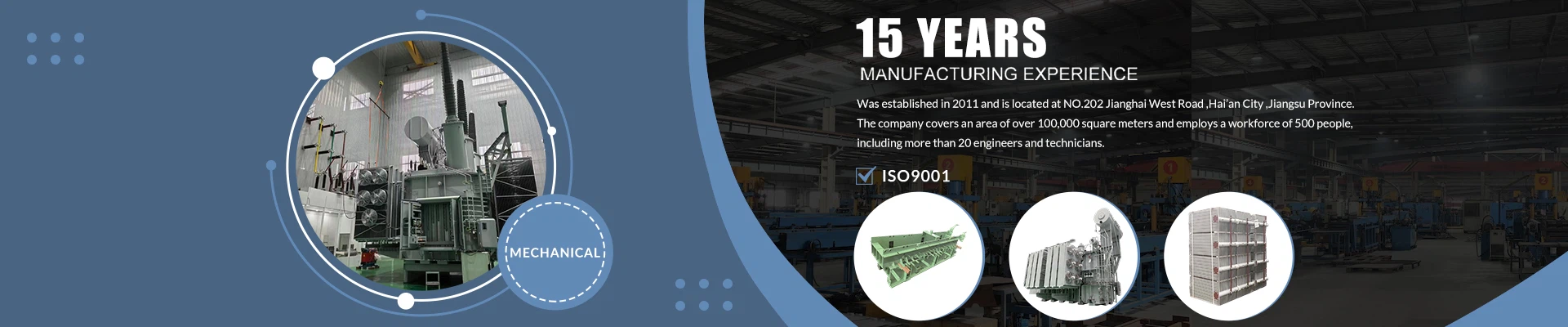
Nantong Zhihe Electric produces drawing-based custom transformer oil tanks for projects up to 500 kV, with robotic and qualified manual welding, 100% leak inspection, C3–C5 options and export packaging. Its factory exceeds 100,000 m², with annual steel-component output above 30,000 tonnes.
The best China transformer oil tank solutions for data centers combine reliable fabrication with early technical communication. Confirming thermal duty, interfaces, testing and site conditions before production prevents hidden downtime risks.

Frequently Asked Questions
1. Why is transformer oil tank reliability important for data centers?
Data centers often operate with N+1 or 2N electrical architectures. A leaking or structurally damaged transformer oil tank can remove one complete power path from service and reduce the redundancy available during maintenance or another equipment failure.
2. What information is required to design a data center transformer oil tank?
The manufacturer needs active-part dimensions, oil mass, guaranteed losses, pressure and vacuum requirements, cover and cable-box interfaces, radiator connections, valves, lifting loads, foundation details, coating class and transport limits.
3. How is transformer cooling capacity determined for a data center?
Cooling design should use guaranteed transformer losses, the expected load profile, ambient-temperature range, altitude, ONAN or ONAF stages and relevant harmonic loading. The tank and radiator bank must be evaluated as one thermal system.
4. How are large transformer oil tanks tested for leakage?
Large main tanks can be filled with controlled compressed air and checked by applying soap water along weld seams, flanges and connections. A leak creates visible bubbles and must be repaired before the tank is completely retested.
5. Is 150 kPa a standard transformer oil tank test pressure?
No. Nantong Zhihe Electric has used 150 kPa held for 20 minutes on a project with 100% inspection, but the correct pressure and holding time must always follow the approved tank design and customer specification.
6. What fire-safety features should be considered for an oil-filled transformer?
Tank design should coordinate with pressure-relief devices, fire detection, drainage, separation distances and secondary oil containment. Containment capacity must follow the applicable local fire and environmental requirements.
7. Which coating system is suitable for data center transformer tanks?
The coating depends on condensation, humidity, industrial pollution, ultraviolet exposure and coastal salt. C3, C4 and C5 systems are used for increasingly aggressive environments, but surface preparation, dry-film thickness and edge coverage also matter.
8. How should buyers select a China transformer oil tank manufacturer?
Review drawing-control procedures, welding qualifications, dimensional inspection, soap-water leak testing, coating inspection, production capacity, nonconformance management, packaging and experience with international transformer projects.
Need a Transformer Oil Tank Built for Critical Power?
Send your approved tank drawing, transformer loss data or project specification to Nantong Zhihe Electric. We support custom transformer oil tank production with robotic and qualified manual welding, 100% soap-water leak inspection, C3–C5 anti-corrosion options and export-ready packaging.


