When purchasing a transformer radiator, you may not be immediately concerned about getting the lowest quotation.
However, if the radiator arrives damaged, leaks, has incorrectly sized flanges or contains deformed panels, it can delay the assembly of a much more valuable transformer.
Before releasing an order, we always confirm:
- Approved radiator drawing
- Cooling method
- Transformer losses
- Panel, header and flange dimensions
- Pressure-testing requirements
- Coating or galvanizing requirements
- Inspection reports
- Export packaging and shipping method
- Project milestones
These checks will normally produce greater savings than a small reduction in the steel price.
Keep Thermal Design Under the Transformer Manufacturer's Control
We ensure that the radiator is manufactured according to an approved drawing.
The radiator supplier should not make assumptions about how much cooling surface the transformer requires.
For power transformer radiators, we normally retain control of:
- Transformer losses
- Cooling type, such as ONAN or ONAF
- Ambient-temperature requirements
- Installation altitude
- Number of radiator banks
- Number and size of radiator elements
- Oil-flow arrangement
- Complete-transformer temperature rise
Temperature-rise requirements and test methods are covered by IEC 60076-2:2011. The completed transformer must meet these requirements.
The radiator manufacturer's responsibility is to reproduce the approved design consistently.
Confirm the Fit-Up Details
Many radiator fit-up problems begin with incomplete or incorrect drawings.
Although overall height and width are important, the dimensions connecting the radiator to the transformer tank usually require more attention.
We normally confirm:
- Radiator panel dimensions
- Number of elements
- Element centre spacing
- Header-pipe size
- Flange size and bolt pattern
- Flange centre distance
- Gasket contact surface
- Inlet and outlet positions
- Valve clearances
- Lifting points and supports
An incorrect flange dimension may prevent the radiator from being installed. It can also create uneven pressure on the gasket after tightening.
We ensure that the radiator is manufactured according to a formally approved drawing revision.
We do not release production using an old PDF, an annotated photograph or dimensions copied from an email.
For repeat projects, a controlled custom manufacturing process helps reduce variation between batches.
Select the Correct Transformer Radiator Type
Different radiator designs are available for different cooling, installation and maintenance requirements.
The RFQ should clearly state which transformer radiator type is required.
Pressed Steel Radiators
Pressed steel radiators are commonly used on oil-immersed distribution and power transformers.
They provide a large cooling surface in a relatively compact structure.
Buyers should pay particular attention to:
- Panel welding
- Header alignment
- Flange dimensions
- Pressure testing

Removable Radiators
Removable radiators use flanged connections and can be removed for transportation, maintenance or transformer-tank access.
IEC 60076-22-2:2019 covers removable radiators for liquid-immersed transformers and reactors.
It includes general requirements, preferred interchangeability dimensions and testing provisions.
Gooseneck Radiators
A gooseneck radiator can help position the radiator around the transformer tank or within a restricted installation area.
Despite the bent header arrangement, the radiator must still provide:
- Sufficient oil flow
- Adequate mechanical support
- Installation clearance
- Access for valves and connections
Hot-Dip Galvanized Radiators
For coastal, humid or highly corrosive environments, buyers may consider hot-dip galvanized transformer radiators.
The galvanizing requirements should be agreed before manufacturing.
They affect:
- Venting and drainage
- Distortion control
- Surface preparation
- Final dimensional inspection
Some RFQs use the search term transformers radiators when referring to radiator sets for multiple transformer models.
However, each model should still have its own approved drawing, revision number and part identification.
Complete Pressure Testing Before Painting
A smooth coating cannot compensate for a leaking weld.
Before discussing colour and gloss, it is important to understand how the supplier controls leakage.
A suitable manufacturing process should include:
- Complete panel and header welding
- Inspect critical dimensions
- Pressurize the radiator
- Hold the test pressure for the agreed time
- Inspect all weld seams and joints
- Repair and retest any leakage
- Release the radiator for painting
The pressure-test requirements should be defined in the purchase specification.
The specification should include:
- Test pressure
- Holding time
- Testing medium
- Inspection method
- Acceptance criteria
- Repair and retest procedure
Each radiator should have a traceable transformer radiator leak-test report.
The report should include the radiator number, test conditions, result, test date and inspector.
The phrase "100% leak tested" has limited value if the supplier cannot provide supporting evidence.
Define the Painting Specification
The phrase "outdoor paint" does not provide a complete coating specification.
An inland installation may face moderate atmospheric exposure. Coastal, tropical, industrial or chemically polluted sites may require a more demanding protection system.
The painting specification should include:
- Surface-preparation grade
- Primer, intermediate coat and topcoat
- Required dry-film thickness
- Colour and gloss
- UV-protection requirements
- Coating-thickness inspection
- Transport-damage repair procedure
Corrosive environments can be classified according to ISO 12944-2:2017.
This edition was confirmed in 2023, although a revision is currently under development.
A defined painting system for the transformer radiator is more useful than a general promise of corrosion protection.
Understand What Influences the Cost
The transformer radiator price is not based only on weight.
Two radiators with a similar height may have different manufacturing costs because of their number of panels, header design, flange arrangement and surface treatment.
The main cost factors include:
- Radiator dimensions
- Number of elements
- Steel grade and thickness
- Header-pipe specification
- Flanges and valves
- Straight or gooseneck design
- Painting or hot-dip galvanizing
- Pressure-testing requirements
- Special fixtures
- Order quantity
- Export packaging
We compare the total landed cost, including:
- Inspection
- Packaging
- Ocean freight
- Customs clearance
- Incoming inspection
- Potential rework
A low price will not matter if the radiator arrives deformed, leaks during oil filling or requires flange modification.
Plan Transportation Before Production Is Complete
Transformer radiators are relatively light compared with the amount of shipping space they occupy.
For regular quantities, we normally use FCL shipping because it reduces handling.
LCL may be suitable for a trial order. However, additional transfers increase the risk of damage to the panels, flanges and surface finish.
The packing plan should prevent:
- Deformed radiator elements
- Damage to flange faces
- Scratches to the surface finish
- Loose valves or accessories
- Water entering open connections
- Straps pressing directly against panels
The export-packing drawing should be reviewed before production is complete.
It should show:
- Radiator orientation
- Supports
- Lifting points
- Flange protection
- Package dimensions
- Container-loading arrangement
Delivery terms such as FCA, FOB, CFR or CIF should name the exact port or location.
They should also follow the current Incoterms® 2020 rules.
Qualify the Supplier Before Increasing Volume
When comparing suppliers, we look beyond quoted capacity and unit price.
We confirm that the supplier controls:
- Drawings and revisions
- Material traceability
- Panel-forming equipment
- Welding-line consistency
- Header and flange fixtures
- Dimensional inspection
- Pressure testing
- Painting
- Nonconformance procedures
- Packaging and loading

For a new supplier, we prefer to begin with a trial batch before ordering annual quantities.
The trial radiators should be installed on an actual transformer tank.
This allows us to check:
- Flange alignment
- Valve clearance
- Gasket sealing
- Lifting arrangement
- Installation time
- Required rework
The approved trial radiator can then become the manufacturing reference for repeat orders.
Payment Progression
A common payment arrangement is 30% deposit and 70% before shipment by T/T.
For a first order, we prefer to release the balance only after reviewing:
- Approved final drawing
- Dimensional inspection report
- Pressure-test report
- Painting inspection
- Packaging photographs
- Confirmed shipping documents
Once the supplier has demonstrated consistent quality and delivery performance, open-account terms may become more practical.
Useful Information to Include in the RFQ
A useful radiator RFQ should include:
- Approved drawing
- Transformer rating
- Cooling method
- Number of radiators per transformer
- Annual quantity
- Peak monthly quantity
- Panel and header dimensions
- Flange centre distance
- Material specification
- Pressure-test requirements
- Painting or galvanizing specification
- Applicable standard
- Required inspection records
- Destination port
- Required delivery date
The main point to remember is that the radiator forms part of the transformer's cooling and oil-containment system.
It should not be purchased as an ordinary welded steel component.
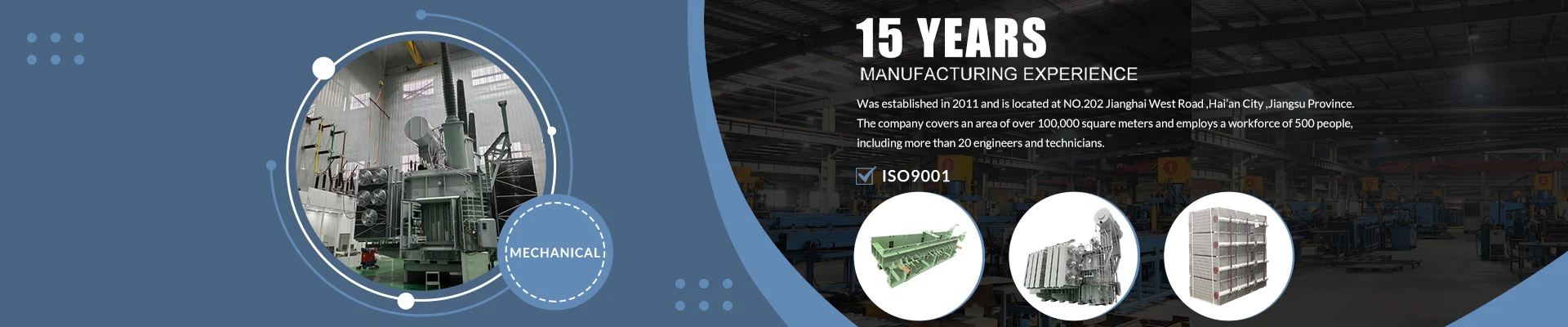
Nantong Zhihe Electric manufactures transformer radiators according to approved customer drawings.
We operate seven automatic radiator welding lines, with production capacity of approximately 100 sets per day.
Standard radiators can be manufactured from approximately 8 days. Hot-dip galvanized radiators can be manufactured from approximately 11 days, depending on the drawings, quantity and inspection requirements.
Our standard process includes:
100% pressure testing at 150 kPa for 20 minutes
Dimensional inspection
Customized C3–C5 coating systems
Export packaging
Submit Your Transformer Radiator Drawing