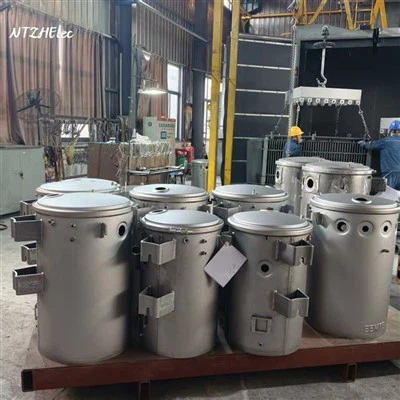
If you've ever walked down a residential street and glanced up at the silver or green box mounted high on a wooden pole, that's a pole-mounted transformer-a quiet workhorse that keeps lights on, appliances running, and neighborhoods connected. As someone who's spent the last decade designing, manufacturing, and supplying these transformers' core components, the pole-mounted transformer oil tank, I've fielded hundreds of questions from electric utility technicians, maintenance teams, and even fellow engineers: "What's the maximum oil level in that tank, anyway?" It sounds like a straightforward question, but the answer isn't just a number scribbled on a spec sheet-it's a balance of engineering science, real-world use cases, and years of on-the-ground lessons that separate a safe, long-lasting transformer from one that's prone to overheating, leaks, or failure. Let's break this down, including why the right maximum oil level matters so much, how it's calculated, and what suppliers like us (and the folks buying our tanks) need to know.


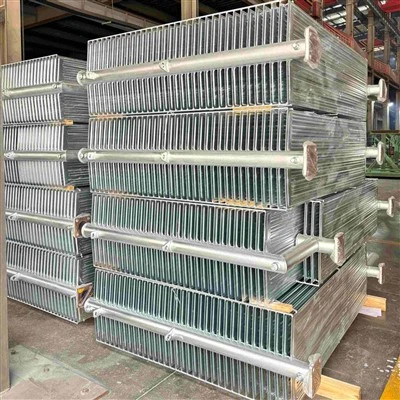
First, let's ground this in why pole-mounted transformers use oil in the first place. Unlike dry-type transformers, which use air to cool windings, pole-mounted models rely entirely on mineral oil (or sometimes ester-based oil for eco-sensitive areas) for two non-negotiable jobs: insulation and heat transfer. The oil surrounds the copper and aluminum windings, acting as a barrier between live electrical parts and the grounded transformer tank, preventing arcing or short circuits that could cause power outages or fire. As the transformer runs, those windings generate heat-lots of it, especially during peak summer months when AC units are cranking. The oil absorbs that heat, rises to the top of the tank, and flows through external cooling fins (or a radiator, for larger units) where it cools before sinking back down in a continuous loop. If there's not enough oil, that heat can't dissipate, leading to overheating, which degrades the oil over time and eventually damages the windings. If there's too much oil, though, that's a whole separate set of problems. That's where the maximum oil level comes in.
Now, I know what some of you might be thinking: "Oil expands when it heats up, right? So why not just fill it all the way to the top to maximize insulation?" That's a common misconception, and it's exactly why the maximum oil level is a tightly controlled spec, not a guess. Mineral oil expands roughly 0.0007 cubic centimeters per cubic centimeter per degree Celsius-meaning a 100-liter tank of oil will expand 0.07 liters (70 milliliters) for every 1°C increase in temperature. On a 90°F (32°C) summer afternoon, when a transformer's windings can hit 150°F (66°C) above ambient temperature, that's a huge amount of expansion. If you fill the tank all the way to the top when it's cold (say, 60°F/15°C), by the time the transformer is running at full load on a hot day, the oil will expand so much that it has nowhere to go-except out through the tank's pressure relief valve, a small vent, or even a seal. That's called "oil seepage," and it's not just a nuisance: lost oil means less insulation and less cooling, and it can leave a sticky, flammable residue on the pole, nearby trees, or sidewalks. Even worse, if the pressure builds enough, it could crack the tank or rupture a seal, leading to a full oil spill that's a fire hazard and requires costly cleanup.
So what is the actual maximum oil level, and who sets it? Let's start with the industry standards, because this isn't something we make up as suppliers. The two most widely referenced standards for pole-mounted transformers in North America are from the Institute of Electrical and Electronics Engineers (IEEE) and the National Electrical Manufacturers Association (NEMA). IEEE C57.12.00, which covers the general requirements for liquid-immersed distribution, power, and regulatory transformers, specifies that the oil level must leave a "free air space" at the top of the tank to accommodate thermal expansion. NEMA's standard for distribution transformers (ANSI C57.12.20) narrows that down specifically for pole-mounted units, requiring that the maximum cold oil level be at least 25 millimeters (about 1 inch) below the top of the tank's shell, and for tanks with conservators (those flexible bladder or airtight chambers that hold extra oil for expansion), the maximum operating level is even more tightly calibrated to avoid overpressurizing the conservator.
Wait, "conservators"-that's another key point. Not all pole-mounted transformer tanks are the same, and their maximum oil level depends heavily on whether they're a simple "dead front" tank or have a conservator system. The basic pole-mounted oil tanks for small, single-phase transformers (the kind you see on most residential poles) are usually dead front: a sealed steel shell with a drain valve at the bottom and a breather vent at the top, plus a level gauge (usually a sight glass on the side) so technicians can check levels. For these tanks, the maximum oil level, measured at the coldest ambient temperature the unit is designed to operate in (usually -40°F to 120°F, depending on the region), is typically 85% to 90% of the tank's total internal volume. Let's put that in perspective: a 50 kVA single-phase pole-mounted transformer tank, which is the most common size for US residential neighborhoods, has a total oil capacity of about 120 liters (31.7 gallons). 90% of that is 108 liters, so you'd leave 12 liters (3.2 gallons) of headspace for expansion. That's enough to handle the maximum temperature rise without seepage, even on the hottest summer days.
For larger three-phase pole-mounted transformers (used for small commercial buildings or multi-unit residential complexes), many suppliers opt for tanks with conservators, which are designed to expand and contract with oil temperature without letting air get in (air causes oil to degrade over time from oxidation). For these tanks, the maximum oil level is set based on the conservator's capacity: the oil is kept between minimum and maximum marks on the conservator's sight glass, with the maximum mark corresponding to the highest expansion expected at full load. That's why when we design a pole-mounted transformer oil tank, whether it's single phase, three phase, or for cold vs. hot climates, we tailor the maximum oil level to both the tank's volume and the operating conditions-something that's not one-size-fits-all. Speaking of which, if you're shopping for a single-phase pole mounted transformer oil tank (link here: /transformer-oil-tank/pole-mounted-transformer-oil-tank/single-phase-pole-mounted-transformer-oil.html), you'll notice that our spec sheet clearly lists the maximum oil level by cold ambient temperature, which is tailored to regions like the southeastern US, where summer temperatures are consistently high.
Now, why does this matter for suppliers like me, and for the utility teams that buy our tanks? I've seen two common mistakes that lead to transformer failure, both tied to oil level. The first is underfilling: if a transformer is installed in winter, when the oil is cool, technicians might be tempted to only add enough oil to hit a middle mark on the sight glass, assuming it will expand in summer. But if they use the wrong cold temperature to calculate the level, they leave too little oil, leading to overheating within the first year. A few years back, a utility client in upstate New York had 12 transformers fail prematurely because their installers underfilled the tanks, thinking that the winter cold meant they could save oil-turns out, the region's summer highs were 95°F, leading to enough heat to cook the windings. The second mistake is overfilling, which I mentioned earlier. A colleague at another supplier told me about a case where a team filled a batch of tanks for a Florida installation in December, when the ambient temperature was 50°F, to the top of the sight glass. By July, when temps hit 100°F at the pole, the oil expanded so much it seeped out through the breather, leaving the transformers underfilled and requiring emergency replacements. Those mistakes could have been avoided if the technicians had used the correct maximum oil level spec, which is based on the tank's volume, the oil type, and the local climate.
Another factor that's often overlooked: oil type. Not all transformer oil is the same. For cold climates, some utilities use a low-viscosity mineral oil that's designed not to thicken in freezing temperatures, while for hot climates, we supply tanks with slightly thicker oil that's better at retaining heat. Even ester-based biodegradable oils, which are becoming more common in environmentally sensitive areas like near lakes or wetlands, have different expansion rates than traditional mineral oil. Ester oil expands about 10% more than mineral oil at the same temperature change, so the maximum oil level for a tank using ester oil has to be lower-usually 82% of total volume, compared to 85-90% for mineral oil. That's why at our company, we don't just ship standard tanks with a generic maximum oil level; we work with each client to adjust that spec based on the oil they're using and the operating conditions of their project.
Testing is another part of getting the maximum oil level right. Before any pole-mounted transformer oil tank leaves our facility, we do a thermal expansion test to confirm that the maximum oil level works. We fill the tank to the specified level at a cold temperature (say, 40°F/4°C), then heat the oil in a controlled chamber to 180°F (82°C) - the maximum operating temperature for most distribution transformers - and measure how much the oil expands. If the expansion doesn't push it into the tank's headspace or beyond the pressure relief valve, we confirm the level is correct. We also test the opposite: if the oil cools down to -40°F (-40°C), does the level drop below the minimum required for insulation and cooling? That's why our single-phase pole mounted transformer oil tank (linked above) includes these test results in every shipment, so installers don't have to guess when filling the tank on-site.
Now, let's talk about why this isn't just a technical detail-it's a cost saver for everyone. A pole-mounted transformer costs anywhere from $1,500 to $10,000, depending on size, and replacing one takes time (you have to shut down power to the neighborhood, rent a bucket truck, etc.)-that's thousands of dollars in outage costs alone. Getting the maximum oil level right means the transformer will run at optimal temperatures, extending its lifespan from the average 20 years to 25 or more, and reducing the number of emergency calls for failed transformers. For utilities, that means lower maintenance costs and happier customers who don't have to deal with unexpected outages. For suppliers like us, it means building trust: when we provide a tank with clear, accurate maximum oil level specs, clients know they can count on our products to work as advertised, no matter where they're installing them.
I'll be honest, when I first got into this business 12 years ago, I thought the maximum oil level was just a random number someone made up. But over time, I've come to see it as one of the most critical design elements of the pole-mounted transformer oil tank. It's the line between a transformer that works safely for decades and one that fails prematurely, causing headaches and costs for everyone involved. Whether you're a technician checking levels in the field, an engineer designing a new distribution system, or a procurement manager looking for reliable transformer components, it's important to remember that the maximum oil level isn't a one-size-fits-all number. It's calculated based on industry standards, thermal expansion data, oil type, and local climate, and it's tailored to the specific tank you're using.
If you're in the market for a pole-mounted transformer oil tank, whether it's a single-phase unit for a residential development or a larger three-phase unit for a small business complex, we can help you navigate these specs. We offer a full range of tanks, with clear, customized maximum oil level recommendations based on your project's location, oil type, and transformer size. Our team has worked with utility clients across North America, from the sweltering heat of Arizona to the freezing winters of Canada, so we know exactly how to design a tank that meets your needs. To discuss your project and get a quote for a pole mounted transformer oil tank (including our single-phase line, linked here: /transformer-oil-tank/pole-mounted-transformer-oil-tank/single-phase-pole-mounted-transformer-oil.html), feel free to reach out directly. We're here to help you get it right, so your transformers run safely and reliably for years to come.
References
- Institute of Electrical and Electronics Engineers (IEEE). IEEE Standard C57.12.00: General Requirements for Liquid-Immersed Distribution, Power, and Regulatory Transformers. IEEE, 2020.
- National Electrical Manufacturers Association (NEMA). ANSI C57.12.20: Standard for Distribution Transformers - Liquid-Immersed, 500 kVA and Below, 34,500 Grady-Voltage 26,000 V and Below. NEMA, 2018.
- American Petroleum Institute (API). Standard 650: Welded Tanks for Oil Storage, 12th Edition. API, 2020.
- Transformer Maintenance Council (TMC). Field Guide for Liquid-Immersed Distribution Transformers. TMC, 2021.
- DuPont. Ester-Based Dielectric Fluids: Properties and Application for Distribution Transformers. DuPont Industrial Biosciences, 2019.