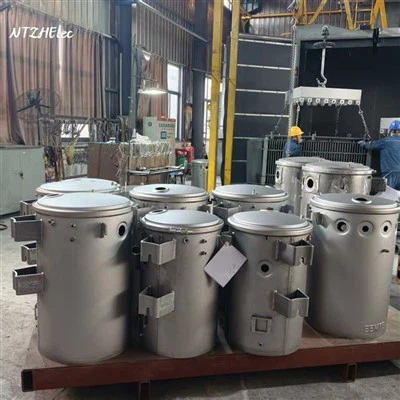
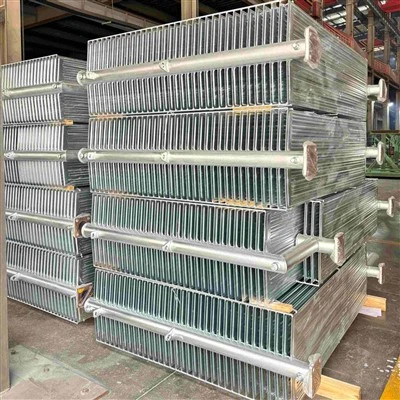
If you've ever looked at or been around a transformer of any size from a utility pole, pad mount or substation you've likely marveled at the giant metallic tank which contains a viscous, almost heavy oil-like substance. As a manufacturer and supplier of these tanks for the past ten years, I know many people don't give the tank much thought beyond 'it holds the oil' but there's actually quite a bit to it! Let's explore what a transformer oil tank is, why they are so crucial for reliable power generation and how we've engineered ours to fulfill its functions.
First, the basics: a transformer has two coils, a primary and secondary, with alternating current (AC) electricity flowing on one and being transferred to the other via electromagnetic induction. However, as this electricity is transferred through the copper windings, it inevitably loses some of its energy in the form of heat, and even the most efficient transformers still lose a percentage of their energy this way. This heat build up can be detrimental to the insulation in the windings or on the core, and this is where the transformer oil tank comes in and performs its primary job; oil containment.
The main purpose of the tank is, indeed, oil containment. The oil is a highly refined, low-moisture dielectric fluid that allows the power from the windings to safely pass to the load without arcing. Without the oil, arcs would form in the high voltage windings of the transformer and destroy it, and while the tank itself contains the oil from draining out, the tank also contains the elements from contaminating the oil. Moisture and debris are the nemesis of transformer oil, and a well-sealed tank will protect its contents from such impurities.


The second function of the oil tank is temperature regulation. The heat produced by the electricity running through the windings, the core, and the oil itself must be dissipated, and the tank facilitates this as well. Depending on the size of the transformer, it may only need a simple steel tank to transfer the heat passively, but larger or more powerful transformers may require additional radiators or even fans to aid in cooling the oil. The materials used in the tank are also important; we typically use carbon or stainless steel (for environments where corrosion is a problem) because they conduct heat well and won't degrade when exposed to the oil or outside elements. The type of tank can be customized depending on the transformer in question. If you need a tank for a pad mounted transformer, we have a few options for you here , and if you need something for a single phase transformer we have those as well. If you need something unique that can be transported from worksite to worksite, we can even build you a custom mobile transformer tank and radiator assembly!
Another important function of the oil tank is its ability to hold oil that has expanded due to high temperatures and let excess oil back in as it cools. If the oil in your transformer simply had nowhere to go when it was heated, it would cause pressure build up in the tank and potentially crack it, spilling precious oil. The solution to this is the conservator; many medium and large size transformers have one mounted on the top of the main tank, which has extra space to hold oil that has expanded. However, the main tank itself must also have space to accommodate expansion, and we make sure to account for that in our designs. The tanks themselves also have pressure relief valves mounted on them to prevent damage from excessive pressure, which can occur if there is a problem with the conservator.
It's no secret that I've had many years of experience working with oil tanks, and I've seen firsthand the problems they cause if not designed or maintained correctly. A few years ago, we were contacted by a utility company who was having issues with their pad mounted transformers failing frequently throughout the course of the year. We took a look and found that the tanks on their transformers were thin pieces of steel which had corroded over time and allowed moisture into the oil, contaminating it. When we replaced these tanks with our heavy duty powder-coated tanks, we've seen a significant decrease in calls about failed transformers on their systems. Seeing that I've made a difference in ensuring the reliability of the power grid is what makes my job worthwhile!
The tanks we make also have a number of fittings on them that allow the transformer to operate and maintain its function. There are drain valves at the bottom of the tank which allow for old oil to be purged, test ports which allow for the dielectric strength of the oil to be tested for water contamination, and mounting brackets to attach the transformer to its substation or pole. The mobile tanks I mentioned previously also have lifting lugs which allow the whole assembly to be lifted and transported to a new site. All of these little details add up to a long lasting, reliable transformer with an oil tank that serves its purpose.
Modern tanks are generally made to specifications that are much tighter than those of the old days, where open type tanks were used. The open type tanks, as you might guess, were open to the atmosphere and allowed air and moisture in, which would cause the oil to oxidize and become more viscous over time. This would cause sludge to form which would clog up the cooling passages in the tank, speeding up the failure of the transformer. We make sealed type tanks that prevent this, as do most manufacturers today. The sealed tanks also allow less chance of oil spills or loss of oil due to evaporation. We've worked with a number of industrial facilities, utility companies and solar farms that require reliable, safe power distribution with sealed type oil tanks.
Many of the tanks we make are shipped overseas, and we take special care to coat the tanks in materials that prevent corrosion due to extreme humidity or cold temperatures. Some clients prefer stainless steel tanks as well, for similar reasons. The type of coating or material can be specified when ordering a tank from us, depending on the environment it will be installed in.
If you're in the market for an oil tank for your company's transformers, we can help you. We offer a number of tanks in stock that are compatible with pad mounted or pole mounted transformers, but we can also build you a custom tank for a unique application. All of our tanks are pressure tested for defects and made to last. If you're frustrated with your current oil tanks and want to see an increase in the lifespan of your transformers, give us a call. We can discuss your applications and requirements and help you choose between our in stock tanks or building something custom for you. Contact us for anything you need!