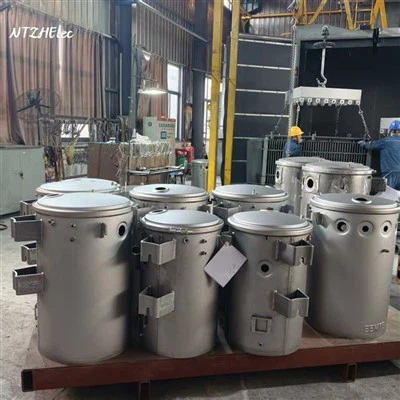
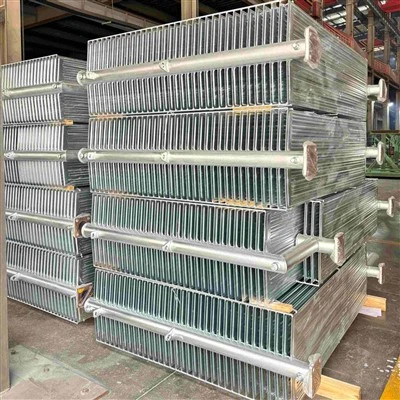
Hey there, if you've ever stopped to think about how big power transformers keep their cool while cranking out electricity for homes and businesses, you've probably glanced at those metal boxes with fins attached-those are power transformer radiators. As someone who's been in the power transformer radiator game for years, I can't tell you how many times customers ask me: "Wait, aren't radiators just for cooling? What electrical parameters do they even have?" Fair question-most folks think radiators are strictly about heat, but when you're talking about a component that's tied directly to the entire transformer's performance, there's a whole set of electrical specs you can't ignore. Let's break this down like I'd break it down for a tech guy swinging by my warehouse, no stuffy jargon overload.
First off, let's set the scene. I spend half my day troubleshooting radiator issues for clients, and one mistake I see a lot is skipping the electrical checks because everyone's focused on oil temperature or fin airflow. But here's the thing: the radiator isn't just a passive cooling shell-it's bonded right to the transformer's core and windings (that's the part that makes voltage change, by the way). So if there's an electrical hiccup in the radiator, it's not just a cooling problem-it's a power quality problem, or even a safety hazard.
Let's start with the big one: Dielectric Strength. You've probably heard this term tossed around with insulating oil, but it applies to radiators too. Dielectric strength is basically how well something blocks electricity from leaking where it shouldn't. For radiators, this isn't just about the metal (duh, metal conducts)-it's about the insulating materials we use to line the internal oil channels and the gaskets that seal everything up. If the dielectric strength drops, you get something called "partial discharge" (PD), which is tiny electric sparks inside the radiator that eat away at insulation over time. For our standard radiators, we test dielectric strength at 25 kV (that's 25,000 volts, for reference) per mm of insulation thickness. I remember a client a year back who cut costs on cheaper gaskets-their radiator's dielectric strength dropped to 12 kV, and within 6 months, they had a PD event that took their entire substation offline. Moral of the story: don't skimp on that spec.
Next up, Insulation Resistance (IR). This is measured with a megohmmeter, and it's a quick check we do on-site all the time. IR tells you how well the radiator is resisting current leakage between the transformer's live windings and the ground (or the transformer tank, which is grounded). For a new, properly manufactured radiator, IR should be above 100 megohms when the oil's at operating temp (usually 80°C). If it's below that? That's a red flag-could be moisture in the oil seeping through the radiator lining, or a tiny crack in the metal that's letting conductive particles in. Last quarter, we had a client call us panicking because their Single Phase Pole Mounted Transformer Oil Tank paired with our radiator was showing 40 megohms on IR. We sent a tech out, and turns out the tank's welding had a micro-pore that let water into the oil path-fixed that, and their IR jumped back up to 120 megohms in a week.
Wait, let's clarify that link for a sec-we work with pole-mounted transformers a lot, because those are the ones on wooden poles in residential areas, and their radiators are smaller but just as critical. That single-phase tank I linked? We manufacture custom radiators to fit exactly those tanks, so the insulation specs line up perfectly. Makes sense, right? If you don't match the radiator's electrical parameters to the tank it's attached to, you're asking for trouble.
Moving on to another key one: Capacitance. No, not the kind in your phone-this is the electrical capacitance of the radiator-oil combination. Capacitance here matters because it affects the transformer's overall impedance, which in turn impacts voltage regulation and power factor. For our radiators, we target a capacitance value between 50 and 200 picofarads (pF) depending on the transformer's kVA rating. Why the range? Smaller transformers (like the 50 kVA pole ones) have smaller radiators, so lower capacitance, while big industrial transformers use bigger radiators with higher capacitance. I've had engineers come to us saying they're seeing voltage fluctuations at their substation, and the first thing we check is radiator capacitance-9 times out of 10, if it's out of spec, adjusting the radiator's fin spacing or internal lining fixes it.
Then there's Frequency Response, but that's more for when the radiator's been installed for a while. Wait, no-actually, the radiator's material and design affect frequency response too, right? Because metal radiators can act as conductors at high frequencies, which is a big deal for grid transformers that handle both low and high-frequency loads. For our high-frequency compliant radiators, we use a special coated steel that reduces eddy current losses-those are little electric currents that form in the metal when exposed to AC, which waste power and heat the radiator more than it should. The eddy current loss for our radiators is capped at 0.5 watts per kg of metal, which is way below the industry average. That's a big selling point for clients dealing with variable frequency loads, like industrial motors.
Oh, and let's not forget Grounding Continuity. This is super basic, but you'd be surprised how often it's overlooked. The radiator has to be electrically continuous with the transformer's grounded tank, otherwise you can get dangerous touch voltage on the radiator's surface. We test this by measuring the resistance between the radiator's mounting points and the tank-needs to be less than 0.1 ohms. Last month, a utility company in the Midwest called us because their radiators were tripping ground fault relays, and they found that the mounting bolts were coated with paint, creating a gap. We sent them conductive washers, and that fixed the grounding continuity issue right away.
Wait, let's circle back to that single-phase pole-mounted transformer oil tank link. Those pole-mounted units are tiny, so their radiators are compact, which means every electrical parameter is even more critical. You can't just throw a big radiator on a pole transformer-it has to fit the tank's dimensions, match the dielectric strength, IR, and capacitance exactly, otherwise it won't work with the local grid. We design our radiators specifically for those tanks, so when a client goes for that link's tank, they know our radiators will plug and play, no extra tweaks needed.
Now, let's talk about why these parameters matter beyond just specs on a datasheet. Let's say you're a utility company upgrading your grid in a growing suburb. You need reliable transformers that don't fail during peak summer (when AC use cranks up, so the transformer's working harder). If you skip checking the radiator's electrical parameters, you could end up with a PD event that causes an outage for 10,000 people, or voltage fluctuations that mess up people's new smart thermostats and security systems. As a supplier, we don't just sell metal fins-we make sure every radiator we ship has its electrical parameters tested in our lab, so our clients don't have to deal with those headaches.
Another thing: Temperature Coefficient of Insulation Resistance. Wait, that's a parameter most people miss, but it's huge. IR drops as temperature goes up, right? But for radiators, we need to make sure that drop is predictable. Our radiators have an IR temperature coefficient of -2% per °C, meaning for every degree Celsius the oil heats up, IR drops 2%. That way, engineers can adjust their on-site measurements to match what they'd see at 25°C (room temp) instead of the 80°C operating temp. I've seen clients misread IR values because they didn't account for this coefficient, leading them to replace a perfectly good radiator unnecessarily-wasting thousands of dollars.
Let's also address a common misconception: "Radiators are passive, so they don't need electrical specs." Nope, not when they're part of a power transformer. The radiator is part of the transformer's electrical circuit in terms of grounding and insulation. If you think about it, the entire transformer is a system-core, windings, oil, tank, radiator-so every component has both thermal and electrical parameters that tie together. You can't separate them.

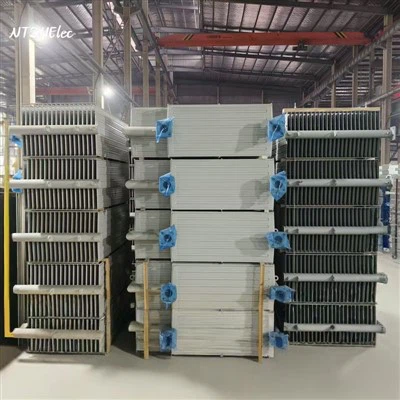
Now, let's get to the practical stuff. When a client reaches out to us for a radiator, we don't just ask "what size transformer do you have?" We ask for the kVA rating, voltage class, whether it's single or three-phase, and if it's for a pole-mounted tank (in which case we'll point them to that single phase pole-mounted oil tank link I mentioned earlier). Then we tailor all those electrical parameters I talked about-dielectric strength, IR, capacitance, grounding resistance-to fit exactly what they need. We even do pre-shipment testing so they get a certificate that lists all the electrical specs, so their maintenance team has the data they need for future checks.
I can't stress enough how important testing is. Our lab runs each radiator through a battery of electrical tests before it leaves our warehouse: dielectric withstand test, IR measurement, capacitance, grounding continuity, and eddy current loss. We've had a few batches where a seal had a tiny defect that would have messed up dielectric strength-caught it before shipping, so no client got a dud. That's the kind of attention to detail that comes from years in the game, not just checking boxes on a spec sheet.
Let's wrap this up. The next time someone asks you, "What are the electrical parameters of a power transformer radiator?" you can tell them it's not just one thing-it's a whole set of specs that tie into safety, reliability, and performance. Dielectric strength keeps electricity from leaking, insulation resistance checks for faults, capacitance affects power quality, grounding continuity prevents shock hazards, and temperature coefficients make maintenance easier. And if you're working with pole-mounted transformers, you know that custom fit (like pairing our radiators with that single phase pole-mounted transformer oil tank) makes all the difference.
If you're in the market for a power transformer radiator-whether it's for a big industrial substation or that small pole-mounted unit-we're here to help. We can walk you through the specs, make sure you get exactly what fits your equipment, and even help with on-site testing if you need it. No hassle, no jargon, just solid parts and support. Reach out if you want to chat more about your project, or if you need clarification on any of these parameters.
References
- IEEE Standard C57.12.00, General Requirements for Liquid-Immersed Distribution, Power, and Regulating Transformers.
- Transformer Radiator Design and Application Guidelines, Electric Power Research Institute (EPRI), 2021.
- National Electrical Safety Code (NESC) 2023, Section 23, Transformers and Regulators.