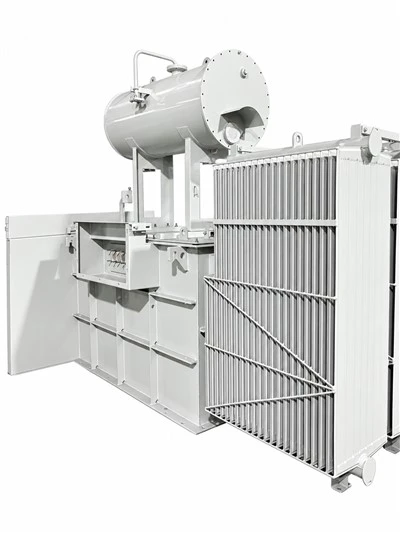
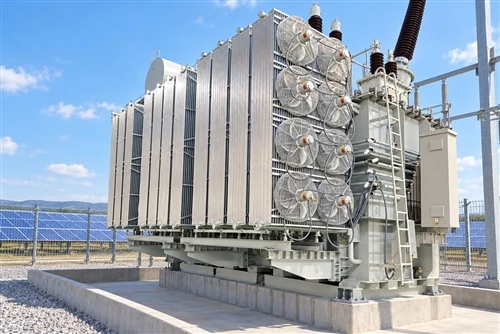
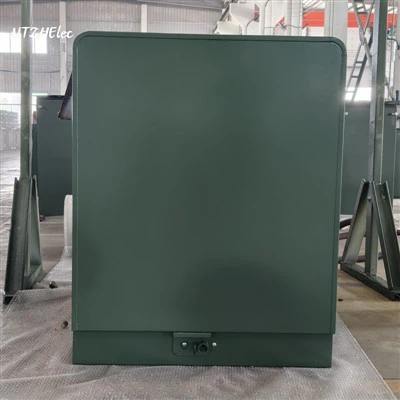
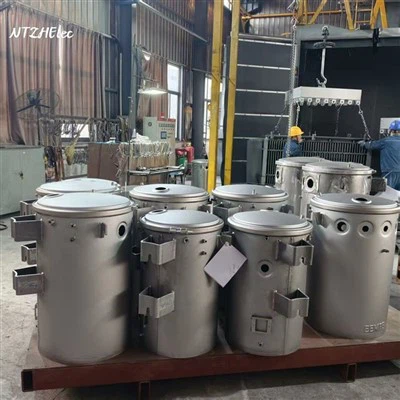
Hey there, it's Jimmy, and I've been in the game as a three-phase pad-mounted transformer oil tank supplier for over a decade now. Let me tell you-when folks ask me what the environmental protection requirements are for these tanks, it's not just about checking boxes. It's about keeping our planet safe, complying with local rules, and making sure your transformer runs for years without causing harm. If you're in the market for these, you've probably seen our Three Phase Pad Mounted Transformer Oil Tank page, but today I'm breaking down exactly what makes these tanks eco-friendly, because that's what matters most right now.
First off, let's start with the basics: why do environmental rules for these tanks even exist? Pad-mounted transformers are the workhorses of neighborhood power grids, right? They're out of sight, usually on concrete pads near schools, parks, or apartment buildings. Their oil-insulating oil, usually mineral oil or ester-based, is key to cooling the transformer, but if it leaks, it can seep into soil, contaminate groundwater, or even end up in local waterways. That's why regulatory bodies like the EPA in the U.S., IEMA in the EU, and national energy boards worldwide have strict rules for oil tanks. And if you're looking at different tank types, check out our Single Phase Pad Mounted Transformer Oil Tank too, since they have similar eco needs, but today we're focusing on three-phase.
First big requirement: leak-proof construction. This isn't just "make sure it doesn't drip"-it's engineering the tank to stop oil from getting out in the first place. Our three-phase tanks use double-walled construction for a reason. Wait, let me explain: the inner wall holds the insulating oil, and the outer wall is a secondary barrier. If the inner wall cracks (from rust, stress, whatever), the outer wall catches the oil before it escapes. But there's a catch here-you can't just have a double wall; you need a leak detection system too. We install sensors between the two walls that alert you immediately if there's a breach, so you can fix it before it becomes a problem. I've seen way too many cases where a single-walled tank leaked for months because no one checked it, and that caused soil contamination that cost thousands to clean up.
Next, material selection. Not all steel is created equal. A lot of cheap tanks use regular carbon steel, which rusts fast, especially if they're outside in humid or salty areas (like coastal towns). Rust creates holes, which leads to leaks. That's why our three-phase pad-mounted tanks use hot-dip galvanized steel for the outer layer, and sometimes stainless steel for inner walls if you're in a super harsh environment. Wait, also-what about the oil itself? Some old tanks use mineral oil, which is a petroleum product that's hard to clean up. We offer ester-based insulating oils too, which are biodegradable. That's a big one for companies that want to meet strict eco standards. And for the Chinese market, we even have customized designs-check out our Chinese Style Substation Tank for local compliance there, including environmental specs tailored to that region.
Then there's oil containment and spill response. Even with the best construction, accidents happen. So the tank needs to have a containment sump around the base-basically a built-in basin that holds all the oil if the tank fails. The size of the sump is regulated too; it has to hold at least 110% of the total oil volume of the transformer, so there's no overflow. We make sure every three-phase tank we ship has a sump that meets or exceeds these rules, no exceptions. Also, the sump can't let oil seep through it-we line it with a high-density polyethylene (HDPE) liner that's resistant to oil, so whatever gets caught there doesn't go into the ground.
Another key point: vapor emissions. Wait, did you know that insulating oil releases volatile organic compounds (VOCs) over time? Those can contribute to air pollution, especially in areas with lots of transformers. So modern tanks need to have sealed vents that catch VOCs and either destroy them (with a catalytic converter) or recycle them back into the oil system. Our tanks use pressure relief valves that are also vapor-tight, so no excess fumes get out. This is super important in urban areas where air quality is a big concern, and it's a rule in many places now.
Rust prevention is ongoing, not just initial. I mentioned galvanized steel, but there's more. We add a primer coat and a UV-resistant topcoat, because sunlight breaks down galvanized coatings over time, leading to rust spots. Also, we design the tank with sloped surfaces so rainwater runs off-no standing water, which speeds up rust. A lot of suppliers skip this, but standing water is a huge cause of leaks later on. And for customers who need temporary setups, like construction sites, we have our Mobile Substation Tank-it's built with the same eco standards, but it's portable, so you don't have to worry about leaving it in one spot causing long-term contamination.


Now, let's talk about end-of-life. No one wants to think about a transformer being retired, but the tank has to be eco-friendly when it's decommissioned. The materials need to be recyclable-steel is 100% recyclable, so our tanks are easy to melt down and reuse, instead of going to a landfill. The oil has to be disposed of properly, and we make sure all our tanks have drain valves that are easy to access, so you can pump out the oil without spilling it. Also, we offer take-back programs for our tanks, so we can recycle them instead of letting third parties mishandle them. That's a big one for companies that care about their carbon footprint.
Wait, let's get real for a second-every customer has different needs. Some are in areas with super strict EPA rules, others in places where the rules are newer, but still, everyone wants a tank that's reliable and eco-friendly. I've had clients come to me before saying, "I just need a tank that doesn't leak and meets the basics," but now even the basics are higher than they were 10 years ago. For example, in California, they now require all pad-mounted transformers sold after 2025 to have double-walled tanks with leak detection, because old single-walled tanks were leaking too much. That's why staying up to date on regulatory changes is non-negotiable for us as a supplier.
Also, let's address a common misconception: some people think "eco-friendly" means more expensive. Yeah, maybe upfront, but what's the cost of a leak? Cleanup can be tens of thousands of dollars, fines for non-compliance can be even more. Our three-phase tanks are built to last 30+ years with minimal maintenance, so the long-term cost is way lower than a cheap tank that leaks after 5 years. We've had customers tell us that switching to our tanks saved them from a $50,000 fine when a competitor's tank leaked. That's the real value here.
Another thing: accessibility for inspections. Regulators need to check tanks to make sure they're complying with environmental rules, so the tank can't be buried under concrete or have parts that are hard to reach. Our designs leave enough space around the sump and leak sensors, so inspectors can do their job without cutting through concrete or moving heavy parts. That's a small detail, but it's something that saves you time and hassle when it's inspection day.
Let me also mention ester oils again-they're a game-changer for environmental compliance. Mineral oil is toxic if it leaks, but ester oil breaks down naturally in the environment in about a week. That means if there is a leak, the damage is minimal. We offer both mineral and ester options for our three-phase tanks, so you can choose what works for your area's rules. For example, in the European Union, ester oil is preferred because of their strict environmental laws, so a lot of our European customers go that route.
Wait, what about fire risks? I know this might seem unrelated, but a fire in a transformer can release a lot of oil and toxic fumes, which is an environmental disaster. So our tanks are designed with fire barriers-usually ceramic fiber insulation around the inner wall-that slow down the spread of fire, so the oil doesn't catch fire easily. That also means fewer emissions if there is a fire, which is a key environmental requirement in many places with high fire risk (like dry, arid regions).
Let's wrap this up. The environmental protection requirements for a three-phase pad-mounted transformer oil tank aren't just a list of rules-they're about protecting our air, soil, and water, and making sure your power setup is responsible. From double-walled construction and leak detection to material selection and end-of-life recyclability, every part of the tank is engineered to meet these standards. Whether you need a standard three-phase tank, a single-phase for a smaller setup, a customized Chinese style tank for a specific region, or a mobile tank for temporary use, we've got you covered.
If you're ready to talk about what you need-whether you're a utility company, a construction firm, or a municipality-hit us up. We can discuss your environmental goals, go over our tank specs, and make sure you get a product that's not only compliant but also built to last. Don't wait until a leak happens-invest in a tank that keeps both your power running and the planet safe.
References:
- U.S. Environmental Protection Agency (EPA). (2022). Spill Prevention, Control, and Countermeasure (SPCC) Rule for Bulk Storage Facilities. Retrieved from epa.gov
- International Electrotechnical Commission (IEC). (2021). IEC 62271-202: High-voltage switchgear and controlgear - Part 202: AC circuit breakers.
- Institute of Environmental Management and Assessment (IEMA). (2023). Environmental Standards for Electrical Distribution Infrastructure. Retrieved from iema.net
- National Grid India. (2022). Guidelines for Environmental Protection in Transformer Installation and Maintenance. Retrieved from nationalgridindia.com