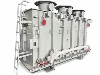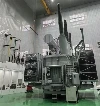
Transformer radiators increase the heat dissipation area and utilize natural convection and heat conduction of oil or air to dissipate the heat generated during transformer operation into the air, thereby reducing the equipment temperature.
The specific working principle is as follows:
When the transformer is running, the internal core and windings generate heat, causing the oil temperature to rise.
Hot oil rises due to its lower density and enters the radiator's pipes, while cold oil sinks, forming a circulation.
Inside the radiator, heat is conducted to the outside through the metal walls and carried away by natural convection or forced air cooling.
The cooled oil flows back to the oil tank, forming a continuous thermal cycle that effectively controls the transformer's operating temperature.
Common heat dissipation methods include:
Natural Convection Cooling (ONAN): Relies on the natural flow of oil and air for heat dissipation. It has a simple structure, low noise, and is suitable for small to medium capacity transformers.
Forced Air Cooling (ONAF): Adds a fan to the natural oil circulation, increasing heat dissipation efficiency by approximately 1.5 times. Suitable for medium capacity transformers.
Forced oil circulation air cooling (OFAF): Oil is forced to flow through the radiator by an oil pump, while a fan blows air through the heat sink. The heat dissipation efficiency is 3 times higher than natural cooling, and it is suitable for large transformers or high-load scenarios.