A transformer radiator can have a good zinc coating and still be wrong for a coastal substation if its cooling performance or connections do not match the design. Discovering that during installation results in rework and delivery delays.
Selecting a hot-dip galvanized radiator means assessing the installation environment, thermal performance, fabrication details, and inspection records against one agreed specification.
Evaluate Salt Exposure, Humidity, and Coastal Site Conditions
"Coastal" is a starting description. Ask whether the equipment faces salt-laden winds, direct spray, persistent condensation, or pollution from nearby industrial operations. Sheltered surfaces may retain deposits because rain does not wash them clean.
Provide the supplier with the site's environmental specification and maintenance expectations. Zinc coating lifetime depends on the actual exposure, and salt-spray test hours do not establish years of service. galvanizeit.org
For projects requiring additional protection, discuss a duplex system: paint or powder coating over galvanizing. Agree on surface preparation and compatible after-treatments before production, particularly if another contractor will paint the radiators.

Define Cooling Requirements Using the Transformer Losses and Operating Temperatures
Size the transformer radiators from the heat they must reject, using the transformer's losses, temperature limits, ambient conditions, and cooling arrangement.
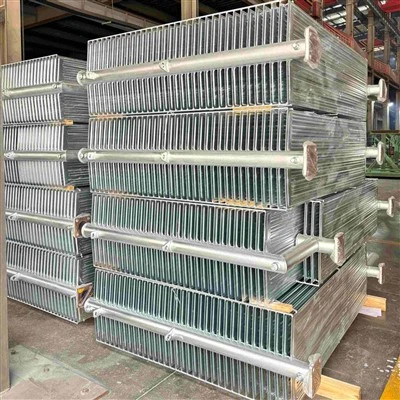
This type of transformer heat exchanger transfers heat from oil to air. Its output depends on oil temperature, airflow, panel geometry, and installation clearances.
For example, assume the assigned cooling duty is 80 kW and one radiator assembly provides 8 kW under the same specified conditions:
Preliminary quantity = 80 ÷ 8 = 10 radiator assemblies
These are assumed figures, not product ratings. Final selection must consider the complete installation and verified thermal data applicable to the galvanized finish.
Confirm Radiator Dimensions, Connection Centres, and Flange Compatibility
Connection centre distance is the spacing between the upper and lower connection centres. It is not necessarily the radiator's overall height.
Check the panel width, panel count, header diameter, flange dimensions, bolt-hole pattern, and connection orientation against the approved drawing. Include clearances for valves, tools, lifting equipment, and removal.
For replacement projects, obtain measurements from the existing installation plus photographs. Similar-looking assemblies can have different interfaces.
Dimensional inspection should cover the finished condition after galvanizing. Zinc buildup on designated mating surfaces or threads can complicate assembly, so agree on their treatment in advance.
Review Material Specifications, Weld Quality, and Internal Cleanliness
Ask the transformer radiator manufacturer to identify the steel grade and thickness used for panels, headers, flanges, and supports. Material changes need approval before fabrication.
Review seam welding, header connections, distortion control, and repair procedures. Automatic welding and skilled manual welding serve different joints; inspection must address both.
The oil passages also require attention. Specify how the supplier removes debris, checks cleanliness, and protects the openings after processing.
Define which surfaces are galvanized and how the oil-contact surfaces are treated. Any internal coating must be compatible with the insulating liquid. Galvanizing venting and drainage provisions must be coordinated with the approved fabrication design.
Specify Zinc Coating Requirements and Galvanizing Inspection Criteria
An HDG radiator-HDG meaning hot-dip galvanized-needs a measurable coating specification.
ISO 1461:2022 covers batch galvanizing of fabricated iron and steel articles. Its requirements differ from those for continuously galvanized sheet. www.iso.org
Standard guidance for ordinary non-centrifuged steel includes these minimum coating thicknesses: galvanizing.org.uk
| Steel thickness | Minimum local coating | Minimum mean coating |
|---|---|---|
| Less than 1.5 mm | 35 μm | 45 μm |
| 1.5–3 mm | 45 μm | 55 μm |
| Above 3–6 mm | 55 μm | 70 μm |
Apply the current standard's sampling rules and any steel-specific provisions. These values are acceptance references, not proof of suitability for every coastal site.
Agree on measurements across relevant panels and components, inspection access, and repair limits. Examine coverage, zinc runs, uncoated areas, and details affecting fit. Request a recorded inspection report rather than relying on appearance.
Agree on Leak Testing and Final Acceptance Requirements
The inspection plan should state the test pressure, holding time, medium, acceptance criteria, and testing stage in relation to galvanizing. Include retesting after repairs and the records supplied with each shipment.
For example, ZHIHE publishes a 150 kPa air-pressure leak test, equivalent to 1.5 bar, for its hot-dip galvanized transformer radiators. This is a stated factory procedure, not a universal pressure requirement for every radiator design. www.ntzhelectric.com
Confirm the agreed procedure during drawing approval. If immersion testing is used, specify subsequent drying and internal cleanliness controls.
Final acceptance should also cover dimensions, coating records, capped connections, identification, and the agreed documentation package.
Plan Packaging, Transport, and On-Site Handling to Protect the Radiators
Newly galvanized surfaces can develop wet storage stain, commonly called white rust, if moisture is trapped between closely packed components. The American Galvanizers Association recommends drainage, separation, and air circulation during storage. galvanizeit.org
For sea freight, support each assembly at designated structural points and prevent panel contact or rubbing. Protect flanges and seal oil openings against contamination.
External packaging should manage condensation through an agreed ventilation or moisture-control arrangement. Tight wrapping around damp surfaces can create problems.
At the coastal site, provide dry storage before installation. Receiving inspection should record impact damage, coating condition, and the condition of connection covers.
Compare Quotations, Production Schedules, and Maintenance Costs
When requesting quotations for transfo radiators, provide each bidder with the same drawings, coating requirements, and inspection plan.
For quotations priced per kilogram, agree on the billable weight basis and whether the rate includes galvanizing, accessories, testing, and packing. Compare the cost of the complete required supply.
Separate production time from shipping and site delivery. ZHIHE lists production from 11 days, subject to drawings, technical requirements, and quantity. Obtain an order-specific schedule before committing to project dates. www.ntzhelectric.com
Include access for cleaning, coating inspection, and future replacement in the cost assessment. A lower purchase price may lose its advantage if maintenance requires difficult dismantling.
Before ordering, request a signed deviation list and inspection plan from the selected supplier. Attach the agreed drawings, coating requirements, commercial scope, and production schedule to the purchase order.