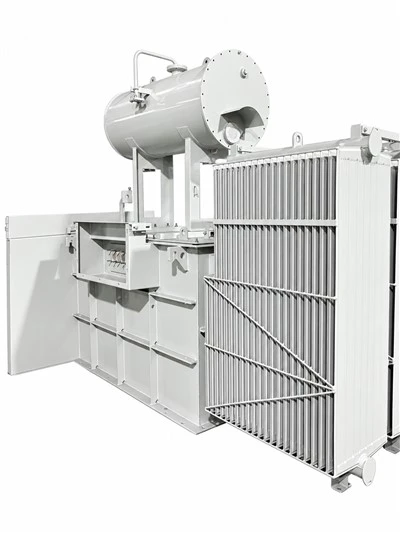
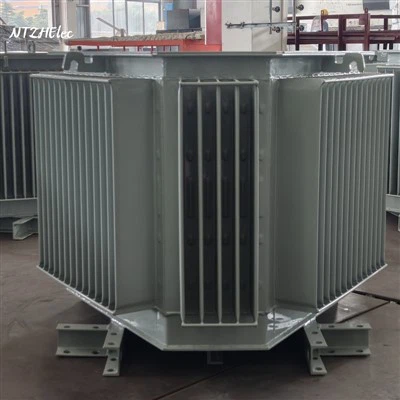
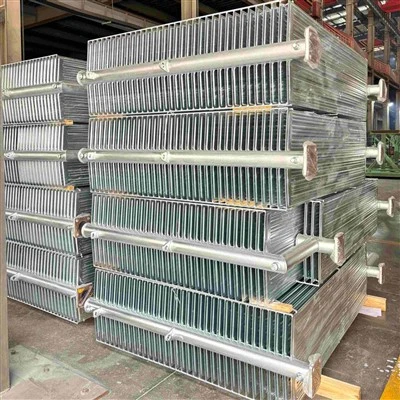
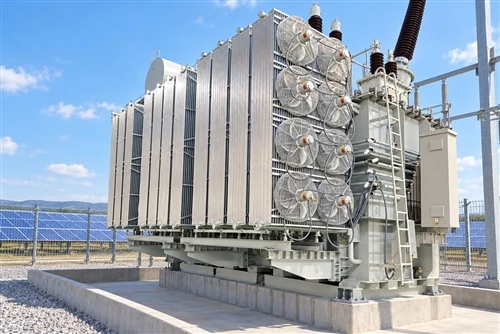
If you work with transformers long enough, you start noticing the quiet workhorses hiding in plain sight-radiators, right? I've been a transformer radiators supplier for over a decade, and one question I get from almost every engineer, plant manager, or even a new grad just starting out is: "What's the right flow rate for coolant in those things?" It's not a one-size-fits-all number, and get it wrong, you're looking at overheating, shortened transformer life, or even a full meltdown. Let's break this down like we chat on a shop floor, no jargon overload, just what actually matters.
First, let's lock in what we're talking about here. Coolant in transformers is almost always mineral oil (sometimes ester fluids for green projects, but oil is 90% of what we move) and radiators are those finned metal units you see bolted to big transformers at substations or even the small pole-mounted ones on residential streets. A lot of folks mix up flow rate with heat load, and that's where mistakes happen. Flow rate is how much oil moves through the radiator every minute or hour, measured in gallons per minute (gpm) or liters per minute (lpm), depending on your region.
Let's start with the basics: why flow rate matters. Your transformer generates heat from copper and iron losses when it's running. If that heat doesn't escape, the oil temp climbs, and paper insulation around the windings breaks down fast-every 10°C above the rated temp cuts insulation life in half. The radiator's job is to pull heat out of the oil and dump it to the air. If flow is too low, oil hangs around in the radiator, doesn't transfer heat well, and your temp spikes. If flow is too high? Wait, that's a thing too. Too much flow means the oil doesn't stay in the radiator long enough to release heat-basically, it's just rushing through without letting the fins do their job. It's like running a shower with the valve wide open: all that water just skims through instead of getting warm.
Now, what's the actual number? I can't just say "5 gpm" because it depends on a ton of factors. Let's list the big ones first: transformer rating (kVA), type of radiator, coolant type, ambient temp, and whether it's natural convection (ONAN, oil natural air natural) or forced (ONAF, oil natural air forced; or ODAF, oil directed air forced). Natural convection is the older, quieter setup-oil moves on its own when it's hot, no pumps. Forced uses fans or pumps, common in larger transformers where natural flow isn't enough.
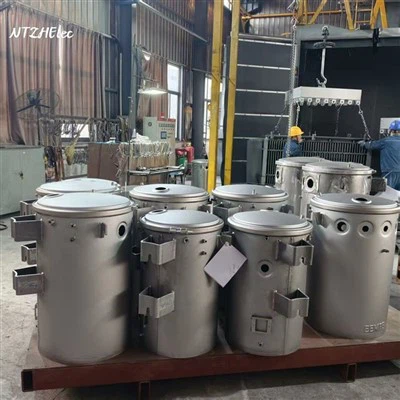
For small transformers, like the single-phase pole-mounted ones you see on residential roads (you can check out our take on those here: Single Phase Pole Mounted Transformer Oil Tank), flow rate is super low, usually between 0.5 and 2 gpm. Why? Those transformers are small, maybe 50-250 kVA, so their heat load is tiny. Natural convection does most of the work, so flow is gentle. Mess with that-add a pump to a small pole unit-and you'll waste energy (pumps use power too, duh) and might not even cool it better.
Medium transformers, 500-5,000 kVA, typically use ONAN radiators, flow rate here is 2-8 gpm. These are substation transformers for neighborhoods or small industrial parks. Their heat load is higher, so oil needs to move a bit more. If you go to forced air (ONAF) for these, the flow rate goes up a little, but the fan helps more than cranking flow alone.
Large transformers, 5,000 kVA and up-like the ones at grid substations or heavy factories-are where flow gets serious, 8-30 gpm, sometimes even higher. These have ODAF or ODWF (oil directed water forced) cooling, huge radiators with multiple sections, and pumps to move tons of oil. For these, you can't wing it-we work with a lot of power engineers here, and they calculate flow rate down to the decimal to hit a delta T (temp difference between oil in and oil out) of 8-12°C. That delta T is key: if your oil comes into the radiator at 75°C and goes out at 65°C, that's a 10°C delta, perfect. Too small a delta, flow's too high; too big, flow's too low.

Wait, let's get into the math part that doesn't require a degree. The formula engineers use is roughly: Flow rate (gpm) = Heat loss (BTU per hour) / (500 * delta T). Let's translate that to real life. A 1,000 kVA transformer loses about 10,000 BTU per hour in idle mode, up to 50,000 BTU at full load. If delta T is 10°C (18°F), that's 500 * 18 = 9,000. So 10,000 / 9,000 = ~1.1 gpm at idle, and 50,000 / 9,000 = ~5.5 gpm at full load. That lines up with the medium transformer number I mentioned earlier. Makes sense, right?
Now, common mistakes I see folks make, especially new ops teams. First, assuming one flow rate works for all transformers. A 10,000 kVA grid transformer isn't the same as a 100 kVA pole transformer. We've had customers try to use a flow rate meant for a 2,000 kVA unit on a 10,000 kVA one, and within a month, the oil temp was 15°C over rated. Oops. Second, ignoring ambient temperature. In Arizona, where it's 40°C in the summer, you need higher flow than in Minnesota at 0°C in winter. The hot air can't carry as much heat, so you need more oil moving through the radiator to dump the extra heat. Third, forgetting that radiator condition affects flow. If a radiator's fins are clogged with dust, dirt, or rust, the flow is restricted, even if your pump is running at full speed. We get calls all the time from people saying their "cooling system is broken" and it turns out their radiators haven't been cleaned in 10 years.
Another thing: coolant type matters. Ester fluids, which are less flammable than mineral oil, have a different viscosity. Viscosity is how thick the fluid is-cold oil is thick, warm oil is thin. Thick oil moves slower, so you need to adjust flow rate a bit. Ester is a bit thinner than mineral oil at the same temp, so flow can be slightly lower, but you still have to calculate for heat load.
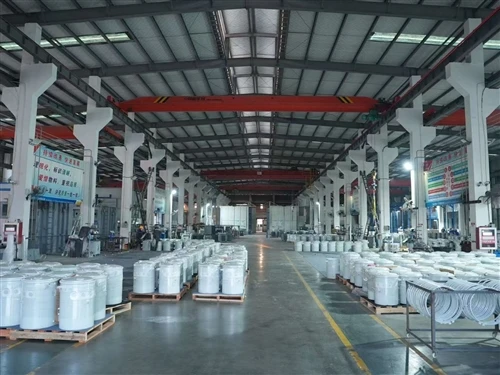
Let's talk about how we test flow rates for our radiators. As a supplier, we don't just build radiators and ship them-we test them in our lab. We hook up a mock transformer load, run coolant through at different flow rates, measure delta T, and see how well it cools. For example, a single-phase pole mounted transformer oil tank we make is tested at 1 gpm, and we adjust the radiator fin spacing to make sure that flow hits the right delta T at full load. If we make the fin spacing too tight, flow is restricted; too wide, the radiator can't dump enough heat. It's a balance we tweak every time we get a customer's specs.
Wait, what about flow direction? Does that matter? Yeah, a little. Most radiators are designed for upward flow-oil comes in the bottom, goes out the top. That helps with natural convection, since hot oil rises. If you flip it, downward flow, you might get a bit less heat transfer because the oil has to fight gravity, especially in natural convection setups. Forced flow can handle either, but we always specify upward for natural units.
Let's wrap this up with practical advice if you're someone who's dealing with this now. First, check your transformer's nameplate-it usually lists the cooling class (ONAN, ONAF, etc.) and the recommended flow rate range. That's your starting point, not a random number online. Second, measure your actual flow rate regularly. You can use a simple flow meter installed on the inlet or outlet of the radiator, or even track oil temp in and out. If the delta T is more than 15°C at full load, your flow is too low; if it's less than 5°C, flow is too high. Third, factor in ambient temp-summer = higher flow, winter = lower. Fourth, keep your radiators clean. A power wash twice a year (or more in dusty areas) goes a long way in keeping flow unobstructed.
I can't tell you how many times a customer has come to us with an overheating transformer, and after checking, their flow rate was off by just 1 gpm. That tiny difference made all the gap between running at 95°C (which will destroy insulation in a year) and 85°C (which gives them 20+ years of life). It's not rocket science, but it's something you can't guess at.
If you're working on a project-whether it's a new pole transformer, a substation upgrade, or replacing a radiator for an old industrial unit-I'm here to help. We build radiators for every size, small and large, and we can work with you to get the right flow rate for your specific transformer, load, and location. Don't mess around with guesswork when it comes to keeping your equipment cool and running smooth.
References
- IEEE Std C57.12.00-2020, "IEEE Standard for General Requirements for Liquid-Immersed Distribution, Power, and Regulating Transformers"
- ANSI/IEEE Std 979-2012, "IEEE Guide for Substation Radiator Cooling Systems"
- Transformer Cooling: Principles and Applications, Electric Power Research Institute (EPRI), 2021
- "Flow Rate Optimization for Transformer Radiators," Journal of Electrical Engineering, Vol. 68, No. 3, 2017