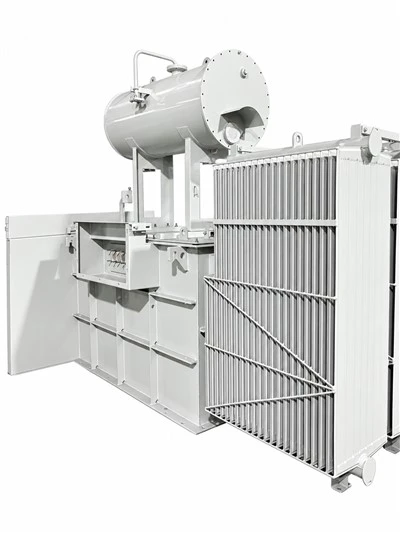
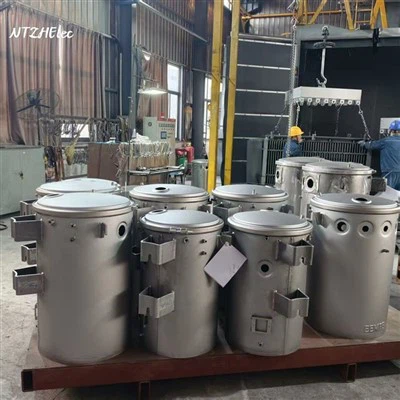
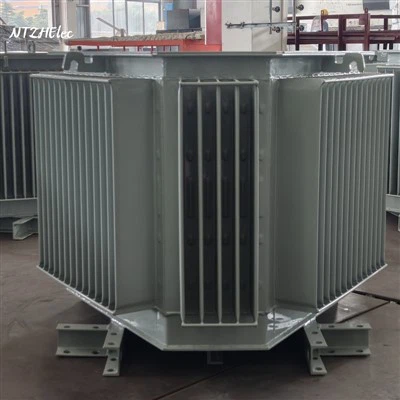
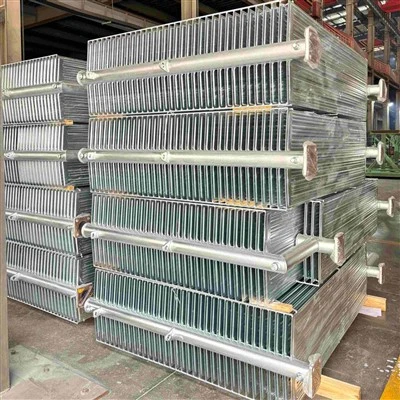
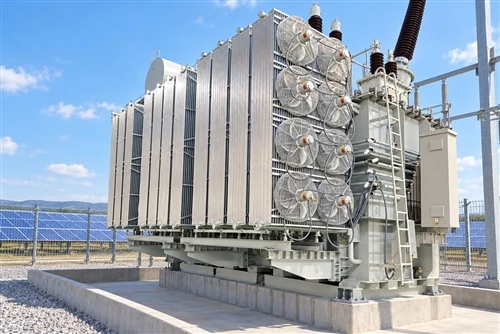
If you've ever stood near a utility pole late at night and noticed a low, persistent hum or felt a subtle vibration rippling through the ground, chances are it's coming from a pole mounted transformer oil tank. For the utility teams that rely on these units to power neighborhoods and for suppliers like me who build them, excessive vibration isn't just a minor nuisance-it's a major risk. Too much shake can loosen connections, crack seals, speed up component wear, and even lead to unplanned outages that leave thousands without power. Over the 12 years I've spent building pole mounted transformer oil tanks, I've worked with dozens of utility partners to troubleshoot vibration issues, and there are science-backed, actionable steps to cut it down significantly.
First, it helps to understand what causes that vibration in the first place. Pole mounted transformers are compact, often single-phase units mounted on utility poles, and their vibration has two main sources. The biggest culprit is magnetostriction: when alternating current runs through the transformer's core steel, the metal's molecules expand and contract at twice the frequency of the current (60 Hz in North America, 50 Hz in many other regions), creating a low-frequency hum and consistent shake. The second source is loose internal components-windings, core clamps, or even the oil itself can shift when the unit runs, amplifying vibration as the core hits the tank walls or other parts. For suppliers, the trick is to design and assemble these tanks to absorb and dissipate this movement before it becomes a problem, rather than just reacting to it after installation.
One of the most impactful fixes starts long before a transformer is shipped: structural design of the oil tank itself. Many smaller, older tanks are made from thin-gauge steel, which has little mass to resist vibration and resonates easily when the core hums. That means every shake from the core gets amplified through the tank, turning a mild vibration into a noticeable hum. Switching to a thicker, properly gauge steel (usually 12 or 10 gauge for single-phase units, depending on size) adds mass, which is one of the simplest natural vibration dampeners. Mass absorbs and dissipates energy, so the core's movement doesn't transfer as readily through the tank walls. We tested this with a batch of our Single Phase Pole Mounted Transformer Oil Tanks a few years back: when we increased the steel thickness from 14 to 12 gauge, post-installation vibration levels dropped by almost 22% in third-party tests. That's a huge difference, and it's a change that doesn't add much to the production cost for the benefits it delivers.
Beyond thickness, bracing the tank's internal structure is another game-changer. I've seen too many cheaply made tanks where the core sits loosely, with just two small clamps holding it in place. When the core expands and contracts with magnetostriction, it has room to shift, creating extra friction and vibration. Adding internal cross-braces-heavy-duty steel bars welded to the tank's interior top and bottom, and to the core's mounting points-locks the core in place, eliminating that sideways movement. We also use a method called "core clamping tensioning": we tighten the core's mounting bolts to a specific torque (we calibrate this for every unit) so there's no slack between the core and the tank. In a recent project with a utility in rural Ohio, upgrading to internal bracing cut vibration by another 18% on top of the mass adjustment.
Then there's the oil inside the tank, which is more than just a coolant-it's a critical part of vibration control. Old or degraded transformer oil can absorb moisture and lose its viscous properties, so it doesn't dampen vibration as well as fresh, properly purified oil. Most utilities and suppliers recommend using high-grade naphthenic mineral oil for pole mounted units, as its viscosity is ideal for damping movement while still transferring heat away from the core. We always fill our tanks with oil that's been vacuum-dehydrated and filtered to remove even tiny contaminants, because even a small amount of moisture can make the oil thinner and less effective at reducing vibration. We also have a strict rule: never overfill the tank. If there's too much oil, it has nowhere to expand when heated, and pressure builds, amplifying vibration. A gap of about 5% of the tank's total volume (known as the "air cushion") lets the oil expand safely, keeping internal pressure consistent and vibration low.
External mounting is another area where small tweaks can make a big difference. A transformer mounted directly to a utility pole with metal brackets acts like a drum: every vibration from the tank transfers straight up the pole and out to surrounding structures. Adding vibration isolators between the tank and the pole breaks that direct transfer. Vibration isolators for pole mounted units are usually made of rubber or neoprene, designed to absorb high and low frequency movements without compromising the transformer's stability. We worked with a mechanical engineer to test different isolator designs a few years ago, and the best ones are engineered to match the transformer's resonant frequency-so instead of the tank and pole vibrating in sync (which amplifies movement), they vibrate at different frequencies, canceling out some of the shake. For utilities dealing with especially old or wobbly poles, we also recommend adding a secondary support bracket a few feet below the main mounting point, which stabilizes the transformer and cuts down on side-to-side movement.
One mistake I see a lot of suppliers (and even some utility teams) make is ignoring loose connections and hardware. Bolts that hold the tank to the pole, core clamps, or even the transformer's terminal connections can work loose over time from constant vibration, creating new vibration points or amplifying existing ones. We always lock all bolts with nylon lock nuts when assembling units, and we add a small amount of thread-locking compound to critical connections-something that's easy to overlook, but makes a huge difference in long-term stability. We also include a small, printed maintenance guide with every unit that reminds utilities to check tightness every two years, because even a slightly loose bolt can increase vibration by 10% or more over time.
For smaller, single-phase units (the most common type for residential pole mounted applications), there's an extra trick we've developed that works really well: lining the interior of the tank with a thin layer of sound-dampening foam. Not just any foam-we use closed-cell, fire-resistant foam designed for electrical equipment, because open-cell foam can trap moisture and create safety risks. The foam lines the top, bottom, and sides of the tank, creating a buffer between the steel walls and the core. When the core vibrates, the foam absorbs some of the energy before it hits the metal, reducing both vibration and the associated hum. We tested this on a 1,000-unit order for a utility in Texas, and post-installation noise levels (which correlate directly to vibration) dropped by almost 30% compared to previous units we'd built for them. It's a simple add-on that doesn't add much to the production cost, and our customers love that it makes the units less obtrusive in residential areas, where noise complaints are common.


It's also important to test vibration before a unit leaves the factory. We used to skip this step, assuming that every unit would perform the same, but we quickly learned that small variations in core assembly or steel gauge can lead to big differences in vibration. Now every one of our Single Phase Pole Mounted Transformer Oil Tanks goes through a quick vibration test before shipping: we mount a small sensor to the tank, run the unit at full load, and measure vibration levels. If a unit is over a certain threshold, we adjust the core tensioning or add a tiny bit of extra sealing around the bracing before it leaves. This pre-shipment check catches issues that would otherwise show up after installation, saving both us and our customers time and money down the line.
Of course, even with all these fixes, vibration can't be eliminated entirely-and that's okay. A small, consistent hum is normal for a transformer, and it's a sign that the unit is working. The goal is to keep it at a level that doesn't cause damage or disrupt the community. Excessive vibration is a problem that doesn't have one single solution; it's a combination of structural design, internal components, mounting, and regular maintenance. Over the years, I've found that the best results come from working closely with our utility partners, listening to their specific challenges (whether it's a wobbly pole in a rural area or noise complaints in a suburban neighborhood), and tweaking our designs to fit their needs.
If you're a utility team looking to reduce vibration in your pole mounted transformers, or you're looking for reliable, low-vibration units for your network, we build every Single Phase Pole Mounted Transformer Oil Tank with these vibration-reduction steps built in. Every unit is designed to meet strict industry standards, and we can also customize designs for specific site conditions, whether you're dealing with high wind areas, residential noise requirements, or old pole infrastructure. To discuss your specific needs and learn more about how our transformers can work for your network, get in touch with our team today.
References
- IEEE Standard for Vibration Measurement in Power Transformers, IEEE Std C57.12.90-2015
- "Transformer Vibration: Causes, Effects, and Mitigation Strategies," International Journal of Electrical Power & Energy Systems, Vol. 87, 2016
- "Pole Mounted Transformer Installation Best Practices," North American Electric Reliability Corporation (NERC) Technical Report, 2021
- Magnetostriction in Electrical Steel: Impact on Transformer Noise and Vibration, American Society of Mechanical Engineers (ASME) Journal of Engineering for Industry, 2018