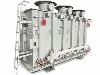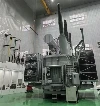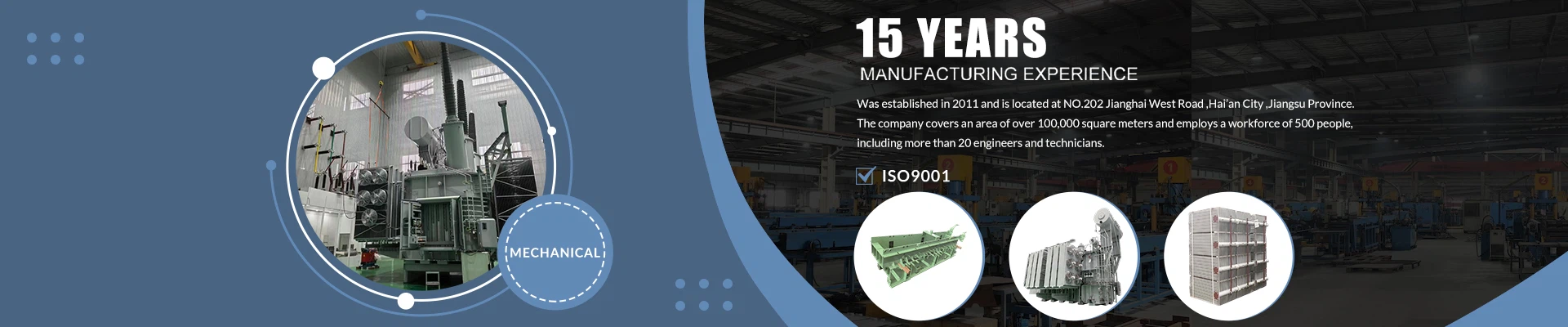
Aluminum alloy is currently the most commonly used material for transformer radiators. It has become the mainstream choice in the power industry due to its optimal balance between lightweight, corrosion resistance, and cost.
Why is aluminum alloy the preferred choice?
Significant lightweight advantage: Aluminum alloy has only 1/3 the density of copper, significantly reducing the overall weight of the transformer, facilitating transportation and installation. It is particularly suitable for applications with strict load-bearing requirements, such as wind power, photovoltaic, and other new energy booster stations, as well as urban substations.
Good thermal conductivity: The thermal conductivity is approximately 200 W/m·K, lower than copper (approximately 400 W/m·K). However, this can be effectively compensated for by optimizing the heat sink structure design (such as increasing fin density and reducing wall thickness), meeting the requirements of most operating conditions.
Excellent atmospheric corrosion resistance: A dense oxide film naturally forms on the surface. Combined with anodizing treatment, its resistance to salt spray corrosion is significantly improved, making it suitable for outdoor high-humidity and dusty environments with long maintenance intervals.
It combines economic efficiency and processability. The raw material cost is lower than that of copper and stainless steel, and it is easy to extrude, weld and mass-produce, making it suitable for large-scale customized manufacturing, which is in line with the current trend of standardization and modularization of power equipment.