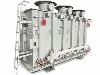
Daily maintenance of transformer radiators is crucial for ensuring efficient heat dissipation and preventing overheating damage. Good maintenance not only extends the overall lifespan of the radiator and transformer but also improves the operational reliability of the power system.
The core methods for daily maintenance are as follows:
Visual Inspection and Cleaning
During daily or weekly inspections, observe the radiator surface for dust, oil stains, catkins, corrosion, or mechanical damage. Especially in industrial areas, windy or humid environments, accumulated dirt can significantly affect heat dissipation efficiency.
Use dry compressed air or a soft brush to regularly clean the gaps between the radiator fins. Avoid using a high-pressure water gun to directly wash the radiator, as this can cause deformation or water ingress.
Oil Leakage Inspection
Focus on checking for oil leaks or drips at the welds, flange connections, and valves of the radiator. Minor leaks can be marked with a marker for easy tracking and handling; serious leaks require immediate shutdown and repair.I

nfrared thermal imaging (as described above) can be used in conjunction with this method. Abnormalities in low-temperature areas can indicate oil circuit blockage or lack of circulation.
Fan and Cooling System Operation Status Monitoring
For air-cooled cooling systems, check if the fans are operating normally, and for any abnormal noises, vibrations, or motor overheating. Newly commissioned fans should be inspected more frequently within one week (as mentioned above).
The fan motor should be kept well-sealed to prevent rainwater intrusion that could lead to insulation degradation or bearing corrosion.
Valve and Oil Circuit Flow Confirmation
Ensure that the butterfly valves on the radiator's inlet and outlet oil pipes are correctly open to prevent human error that could interrupt oil flow.
If a group of radiators is found to have a significantly lower temperature, it may be due to valves not being open or oil circuit blockage; these should be investigated promptly.
Temperature Monitoring and Comparative Analysis
Use an infrared thermometer to regularly measure the temperature of various parts of the radiator to determine if there is localized overheating or excessive temperature differences.
Analyze trends using the transformer top-level oil temperature data. If the oil temperature remains consistently high while the load is stable, the radiator's operating status should be checked first.