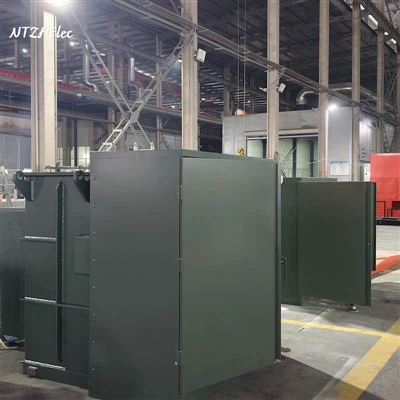
Hey there! As a supplier of transformer oil tanks, I've been getting loads of questions about what factors can affect the heat dissipation of these essential pieces of equipment. So, I thought I'd break it down for you all in this blog post.
1. Design of the Transformer Oil Tank
The design of the transformer oil tank plays a crucial role in heat dissipation. For example, the shape and structure of the tank can influence how well the heat is transferred from the transformer to the surrounding environment.
Let's talk about some of the tank types we offer. The Single Phase Pad Mounted Transformer Oil Tank has a unique design that's suitable for pad-mounted transformers. Its shape allows for efficient heat transfer, as it maximizes the surface area in contact with the air. The more surface area there is, the easier it is for the heat to dissipate.
The Corrugated Tank for 3D Wound Core Transformer is another great example. The corrugated design increases the surface area of the tank significantly. This extra surface area helps in better heat exchange with the atmosphere, meaning the transformer can stay cooler.
Another aspect of the design is the internal structure. Proper baffles inside the tank can ensure a uniform flow of the transformer oil. This uniform flow helps in carrying the heat from the transformer windings to the tank walls, where it can be dissipated. If the baffles are poorly designed or missing, the oil flow may be restricted, leading to hot spots and reduced heat dissipation efficiency.
2. Transformer Oil Properties
The transformer oil is the lifeblood of the cooling system in a transformer oil tank. Its properties have a huge impact on heat dissipation.
One of the most important properties is its thermal conductivity. High thermal conductivity means the oil can transfer heat more effectively from the transformer's core and windings to the tank walls. We always make sure to use high - quality transformer oil with excellent thermal conductivity in our tanks.
Viscosity is another key factor. If the oil is too viscous, it won't flow easily. This can lead to poor circulation and uneven heat distribution. On the other hand, if the oil is too thin (low viscosity), it may not provide sufficient insulation. Finding the right balance is crucial for optimal heat dissipation.
The oil also needs to have good oxidation resistance. Over time, oil can oxidize, especially at high temperatures. Oxidized oil forms sludge, which can clog the oil flow passages in the tank and reduce its ability to carry heat. Regular oil testing and replacement when necessary can help maintain the oil's properties and ensure efficient heat dissipation.
3. Ambient Conditions
The environment where the transformer oil tank is located can have a big impact on its heat dissipation.
Temperature is an obvious factor. If the ambient temperature is high, it becomes more difficult for the transformer to dissipate heat. For instance, in hot desert regions, the transformer may have to work harder to keep cool. In such cases, additional cooling measures may be required, like installing fans or using forced air cooling systems.
Humidity can also play a role. High humidity can affect the insulation properties of the transformer oil and the tank itself. Moisture can get into the oil, reducing its dielectric strength and potentially causing electrical problems. It can also lead to corrosion on the tank surface, which can impede heat transfer.
The presence of dust and pollutants in the air can also be an issue. Dust can accumulate on the tank surface, forming a layer that acts as an insulator. This reduces the heat transfer rate from the tank to the air. Regular cleaning of the tank surface can help mitigate this problem.
4. Load on the Transformer
The load on the transformer is directly related to the amount of heat generated. When the transformer is operating at a high load, more electrical energy is being converted into heat.
If the load is constantly high or fluctuates widely, the transformer oil tank has to work harder to dissipate the heat. For example, in industrial areas where there are large machinery that draw a lot of power, the transformers may experience high loads. In such cases, transformers with larger oil tanks or more efficient cooling systems may be required.
Overloading the transformer can lead to excessive heat generation. If the heat cannot be dissipated properly, it can cause damage to the transformer insulation, reducing its lifespan. Monitoring the load on the transformer and ensuring it operates within its rated capacity is essential for maintaining proper heat dissipation.
5. Cooling System Efficiency
Transformers often come with various cooling systems to enhance heat dissipation.
Natural air cooling is the simplest form. In this case, the heat is dissipated through the radiation and convection of the tank surface to the surrounding air. However, for larger transformers or those operating under high loads, natural air cooling may not be sufficient.


Forced air cooling systems, on the other hand, use fans to blow air over the tank surface. This increases the rate of heat transfer by removing the warm air around the tank and replacing it with cooler air. These systems can significantly improve heat dissipation, especially in hot environments.
Oil - to - water cooling systems are also used in some high - power transformers. In these systems, the transformer oil transfers its heat to water, which is then circulated through a cooling tower or other heat exchangers. This type of cooling system can handle large amounts of heat and is very efficient.
The efficiency of these cooling systems depends on proper maintenance. For example, fans need to be cleaned regularly to ensure they can blow air effectively. In oil - to - water cooling systems, the water quality needs to be monitored to prevent scaling and corrosion in the heat exchangers.
6. Material of the Tank
The material used to make the transformer oil tank can affect heat dissipation.
Steel is a commonly used material for transformer oil tanks. It has good mechanical strength and can withstand the pressure inside the tank. Additionally, steel has a relatively high thermal conductivity, which means it can transfer heat from the oil to the outside environment quite well.
Some tanks may also use aluminum or other alloys. Aluminum is lighter than steel and has a high thermal conductivity. However, it may not be as strong as steel in some cases, so the design needs to take this into account.
The surface finish of the tank material also matters. A smooth surface finish can enhance heat transfer by reducing the resistance to air flow over the surface. On the other hand, a rough or painted surface may act as an insulator and reduce the heat transfer rate.
Conclusion
As you can see, there are many factors that can affect the heat dissipation of a transformer oil tank. From the design and the properties of the transformer oil to the ambient conditions, load on the transformer, cooling system efficiency, and the material of the tank, each aspect plays a crucial role.
At our company, we're dedicated to providing high - quality transformer oil tanks that take all these factors into consideration. Whether you're looking for a Single Phase Pole Mounted Transformer Oil Tank for a pole - mounted application or a 330KV Power Transformer Oil Tank for a high - voltage power system, we've got you covered.
If you're in the market for a transformer oil tank, or you want to learn more about how to optimize heat dissipation in your existing setup, don't hesitate to reach out. We're here to help you find the best solution for your needs. Whether you need a 110 - 220KV Power Transformer Oil Tank or any other type, we can start a great conversation and work together to meet your requirements.
References
- "Transformer Engineering: Design, Technology, and Diagnostics" by Turan Gonen
- "Electrical Power Transformer Engineering" by Theodore Wildi