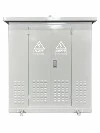
An oil conservator is basically a tank on top of an oil-filled transformer. It does two main things:
Deals with oil expansion and contraction : When the transformer is working hard, the oil gets hot and expands. Since the main tank is completely full, the extra oil has nowhere to go but up into the conservator. When things cool down, the oil shrinks and the conservator sends oil back down to the tank. This keeps the main tank completely full all the time, no matter the load or temperature.
Keeps the oil away from air : The conservator greatly reduces how much oil is in contact with air. This stops the oil from soaking up moisture and oxidizing, which means it lasts a lot longer.
The current standard for this is the corrugated metal conservator. It's the third generation of the technology and the most advanced one you'll find. Inside, it uses a high-quality stainless steel bellows (the "corrugated core"). This bellows expands and contracts to handle the oil volume changes, but it also creates a perfect seal, keeping the oil completely separate from the air.
This design fixes the problems of the older types. The first generation was open to the air, so the oil would absorb moisture and oxidize. The second generation used rubber bladders or diaphragms, but the rubber would eventually break down, get brittle, and give you false oil level readings.
A couple of key specs: the resistance from the bellows is less than 6 kPa, so it won't mess with your protection relay settings. It's also strong enough to handle a full vacuum down to -0.1 MPa, which is what you need for the vacuum filling process. With its all-metal build, it'll easily last 30 years-as long as the transformer itself.
Internal vs. External
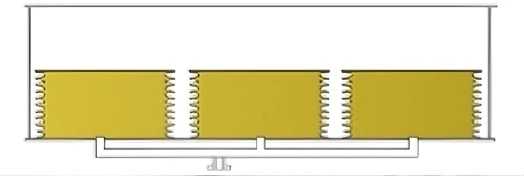
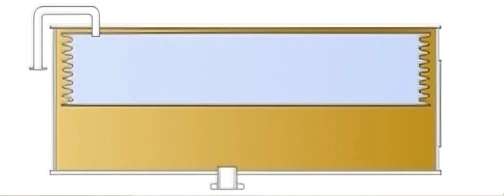
There are two main types of corrugated metal conservators: internal oil and external oil.
|
Parameter |
Internal Oil Type |
External Oil Type |
|
|
|
|
|
Oil Location |
Inside the bellows |
Outside the bellows (within the tank) |
|
Air Location |
Outside the bellows |
Inside the bellows |
|
Leakage Risk |
Oil leaks if bellows rupture |
Air enters the oil (no oil leakage) |
|
Compensation Efficiency |
~90% |
~100% (nearly 100%) |
|
Application Scenarios |
Low-voltage, small-capacity transformers |
All voltage levels and capacities |
Selection Criteria
The required compensation volume of a conservator is determined by the transformer's total oil volume and the maximum temperature variation of the operating environment:
V_comp = V_oil × β × ΔT_max
Where:
V_comp = Required compensation volume
V_oil = Total oil volume of the transformer
β = Oil volume expansion coefficient
ΔT_max = Maximum temperature difference (max. ambient temp. - min. ambient temp.)
In regions with large temperature fluctuations, the oil level-temperature (T/H) curve must be calibrated to ensure accurate level readings across the entire operating temperature range.
Why Choose Corrugated Metal Conservators Now
Transformer conservators have come a long way: from open-top, to rubber bladder, to the corrugated metal design we have today. The metal ones are now the standard for any large transformer. Because they're fully sealed, never need maintenance, and last so long, they make the whole transformer more reliable and keep the oil in good shape for decades. When you're picking one out, just make sure you've got the transformer's specs and the local temperature range right, and you'll have years of trouble-free operation.