

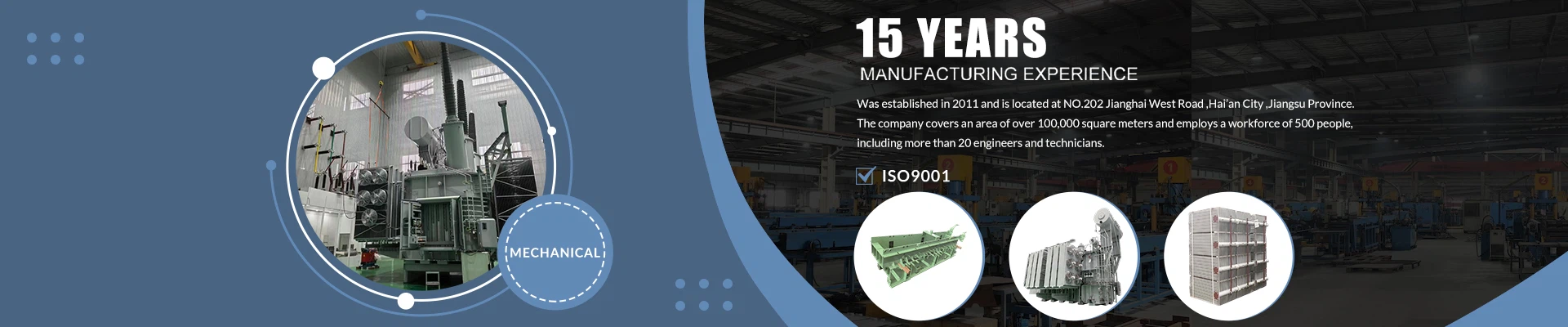
The transformer oil tank is the core outer casing component of an oil-immersed transformer. Its main function is to house the iron core and windings and fill it with transformer oil, providing insulation, heat dissipation, sealing protection, pressure regulation, and support. Its vertical design facilitates natural convection due to density differences in the transformer oil caused by temperature changes, improving heat dissipation efficiency.
Main Types
Based on capacity and structure, common transformer oil tanks fall into three basic types:
Box-type oil tank (core-lifting type): Suitable for medium and small transformers. The upper tank cover is removable, facilitating the removal of the transformer body for maintenance.
Bell-type oil tank: Used for large transformers. During maintenance, only the lighter tank shell needs to be lifted, reducing the requirements for lifting equipment.
Sealed oil tank: The upper and lower tank edges are welded together to achieve a fully sealed structure. Commonly used in fully sealed transformers, it prevents oil from contacting air, extending service life.

Among them, the corrugated oil tank is a specially designed sealed oil tank. It compensates for the thermal expansion and contraction of the oil by welding elastic corrugated sheets to the tank wall, increasing the heat dissipation area. It is widely used in fully sealed transformers. The folded-plate (corrugated) oil tank is a modern new structure. It replaces traditional reinforcing ribs by directly folding grooves into the steel plate, reducing the number of welds and lowering the risk of leakage.
Key Technologies and Performance
Cooling Method: Primarily relies on natural convection cooling of the oil. The outer wall is usually equipped with heat sinks, heat pipes, or independent radiators. For large transformers, fans (forced air cooling) or oil pumps (forced oil circulation) can be added to improve cooling efficiency.
Sealing Requirements: According to GB/T 6451 standard, the sealing performance test requires no leakage for 24 hours under 50 kPa pressure; after maintaining a pressure of 20–25 kPa for 12 hours, the residual pressure of the corrugated oil tank should not be less than 70%.
Materials and Processes: Usually manufactured using low-carbon steel or high-strength steel plates, and gas shielded welding is commonly used in welding processes. To reduce stray losses, internal magnetic shielding is always provided and grounded, with a grounding resistance of no more than 0.5Ω.


